






Lithium vs AGM Battery for Car Audio: Which One Should You Buy?
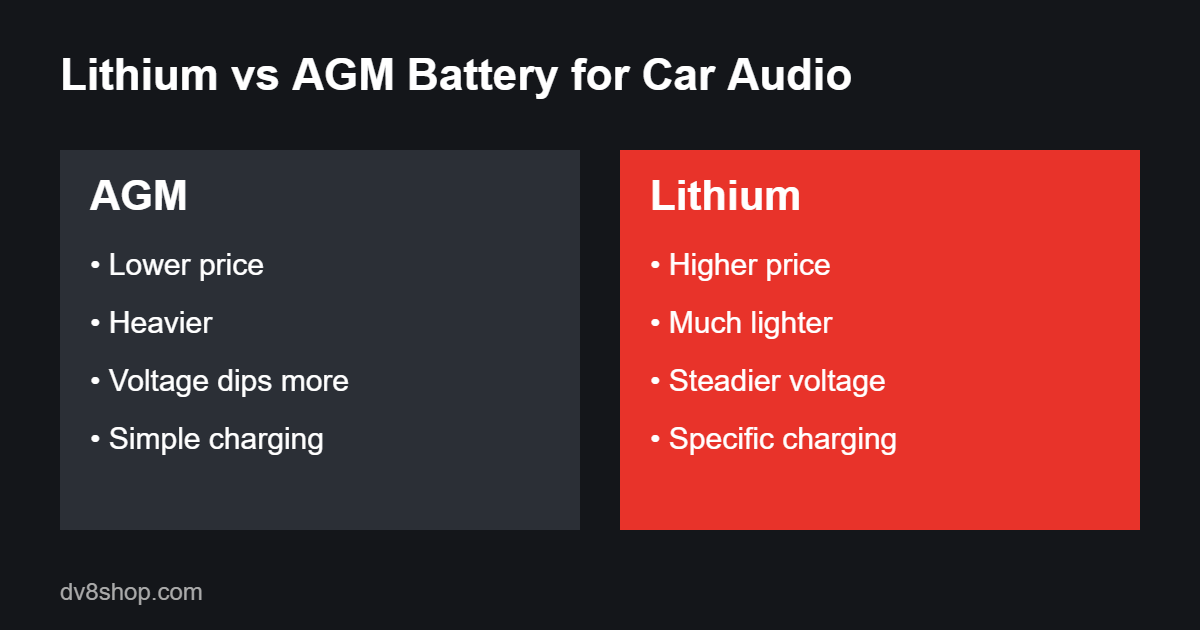
Lithium vs AGM battery for car audio: compare weight, voltage under load, lifespan and cost, and find out which one fits your system.
19 categories
20 brands
DV8
17 products / 2 categories
SoundQubed
125 products / 6 categories
Beyma
29 products / 2 categories
FI Car Audio
31 products
Every FI Car Audio product, together on one page.
Resilient Sounds
21 products / 2 categories
Stetsom
26 products
Every Stetsom product, together on one page.
Prodigy Audio
15 products / 2 categories
PRV Audio
189 products / 8 categories
Gately
50 products / 3 categories
Ruthless
17 products / 2 categories
Ill Customz
37 products / 2 categories
Limitless
17 products / 4 categories
BrandX
108 products / 5 categories
Galeforce
9 products / 2 categories
DS18
1,173 products / 15 categories
Nagy
11 products
Every Nagy product, together on one page.
Elite Sounds
7 products / 2 categories
Custom Speaker Pods
998 products / 4 categories
Voodoo Bikeworks
61 products / 9 categories
A car audio DSP is a small box that lets you fix the sound your car gets wrong, and it can change a system more than a new set of speakers.
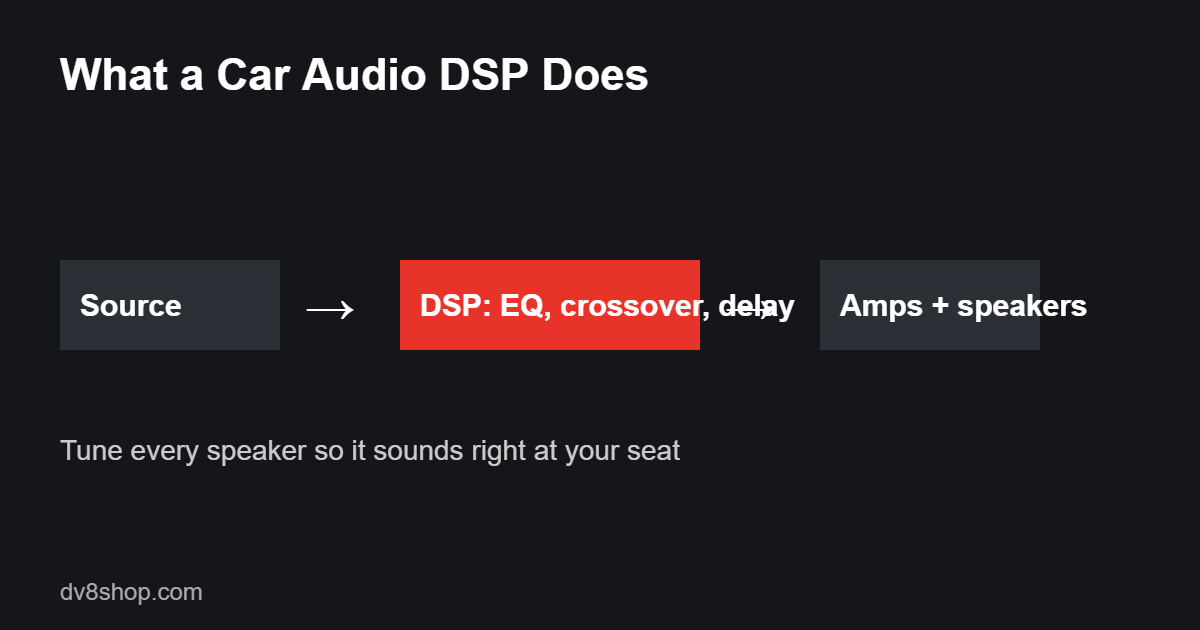
DSP stands for digital signal processor. It sits between your source and your amps, takes the audio in, and lets you shape it with software before it reaches the speakers.
A car is a rough place for sound. Speakers sit low in the doors, you sit off to one side, and the glass and seats bounce sound around. A car audio DSP lets you correct for all of that.
| Tool | What it fixes |
|---|---|
| Equalizer (EQ) | Boosts or cuts frequencies that sound too loud or too quiet in your car |
| Crossovers | Sends the right frequencies to the right speakers |
| Time alignment | Delays closer speakers so sound arrives at your ears together |
| Level matching | Balances the volume of each speaker |
Most good units also include a limiter and extra outputs, so you can control every speaker on its own.
In most cars the left door speaker is much closer to you than the right one. Your brain hears the near speaker first, and the music seems to come from just one side. Time alignment adds a tiny delay to the closer speakers so everything lands together.
When it’s set right, the sound stage moves up onto the dash and the vocals sit in the middle. That’s the part people notice first.
If you’re running a basic system with a head unit and a few speakers, you may not need one. But a car audio DSP is a big help if you have component speakers, a sub and multiple amps, or you just can’t get the sound to sit right.
It also helps if you’re keeping a factory head unit. Many DSPs can take the factory signal and clean it up, which saves you from replacing the dash. Our guide to the big 3 upgrade is a good companion, since a processor can only sound as good as the power behind it.
The biggest mistake is cutting and boosting everything without a plan. Boosting a frequency by a lot eats headroom and adds distortion. It’s usually better to cut what’s too loud than to boost what’s too quiet.
The next is skipping the setup. A DSP only helps if it’s tuned, ideally with a measurement microphone or by someone who knows what they’re doing. Also, set your amp gains properly first, since a processor can’t fix a clipping amp.
You can learn it yourself with some patience, and plenty of units come with an app and a mic. If that sounds like a headache, a shop can tune it for you. A good tune is worth paying for.
Yes, if you want better imaging and tonal balance. It’s one of the best upgrades for a system that already has decent speakers and amps.
Not by itself. It improves how the sound is balanced, which often makes it seem clearer, but power comes from your amps.
Yes. Many units accept speaker-level inputs, so you can keep the factory stereo and still tune everything.
It helps a lot. A measurement mic shows you what the car is doing, so you aren’t tuning by guesswork.
If you’re not sure which processor suits your setup, browse dv8shop.com or send us a message and we’ll help you pick.
Lithium vs AGM battery for car audio: compare weight, voltage under load, lifespan and cost, and find out which one fits your system.
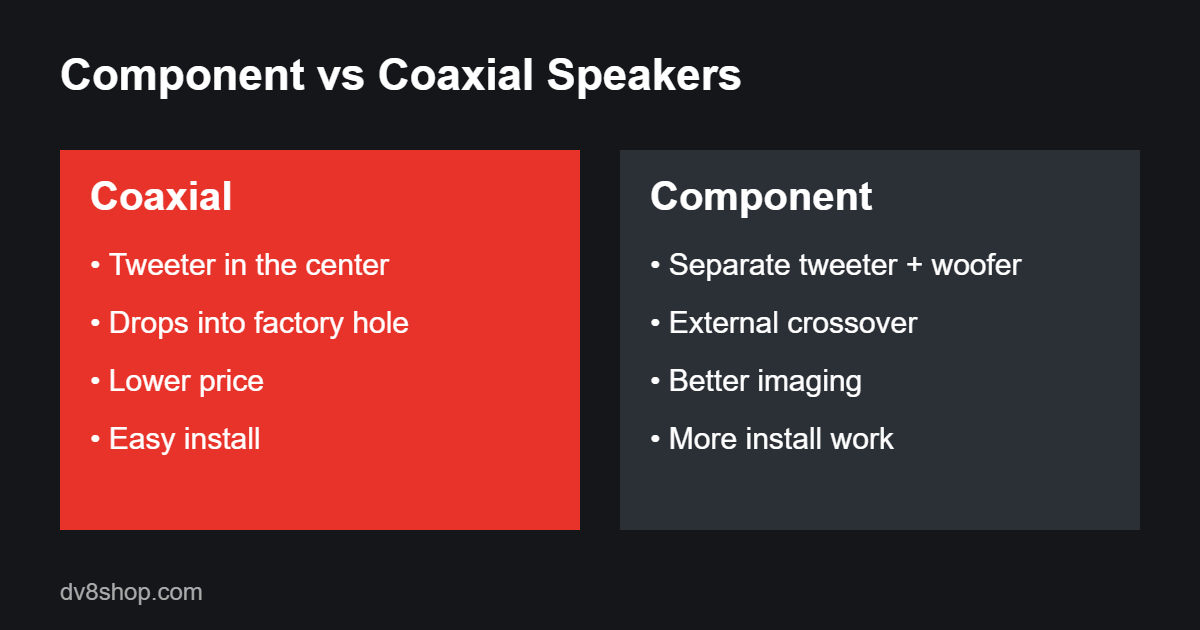
Component vs coaxial speakers explained: how each is built, how they sound, what installation takes, and which one to buy.
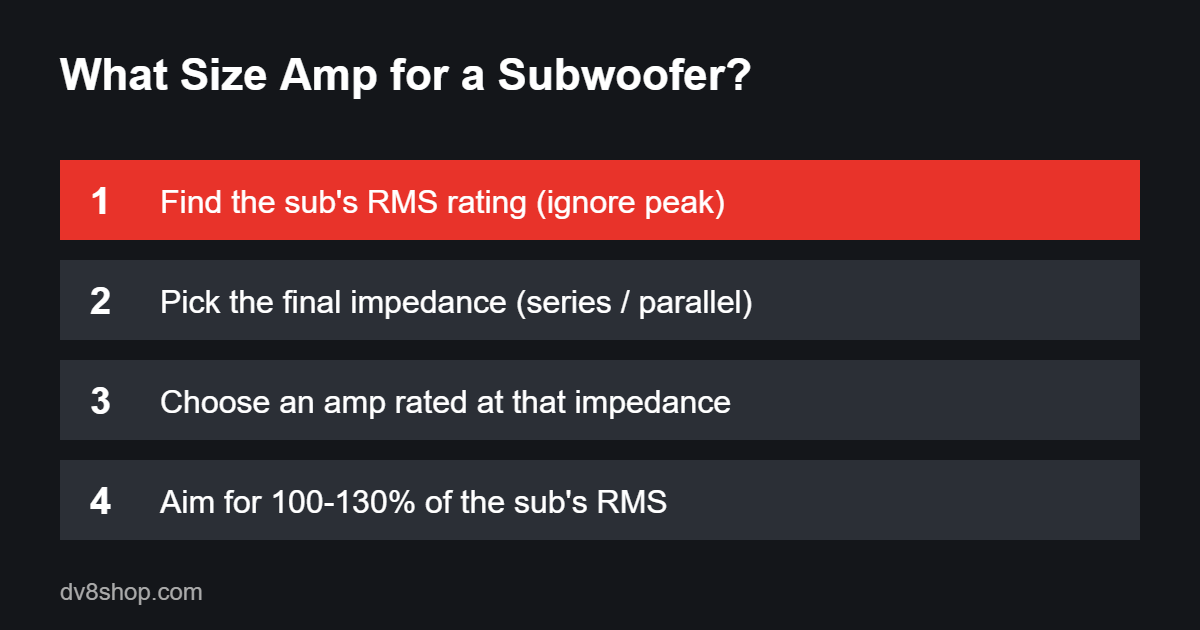
What size amp for a subwoofer? Learn how to match RMS power and impedance, with 4 easy examples and mistakes to avoid.