






Lithium vs AGM Battery for Car Audio: Which One Should You Buy?
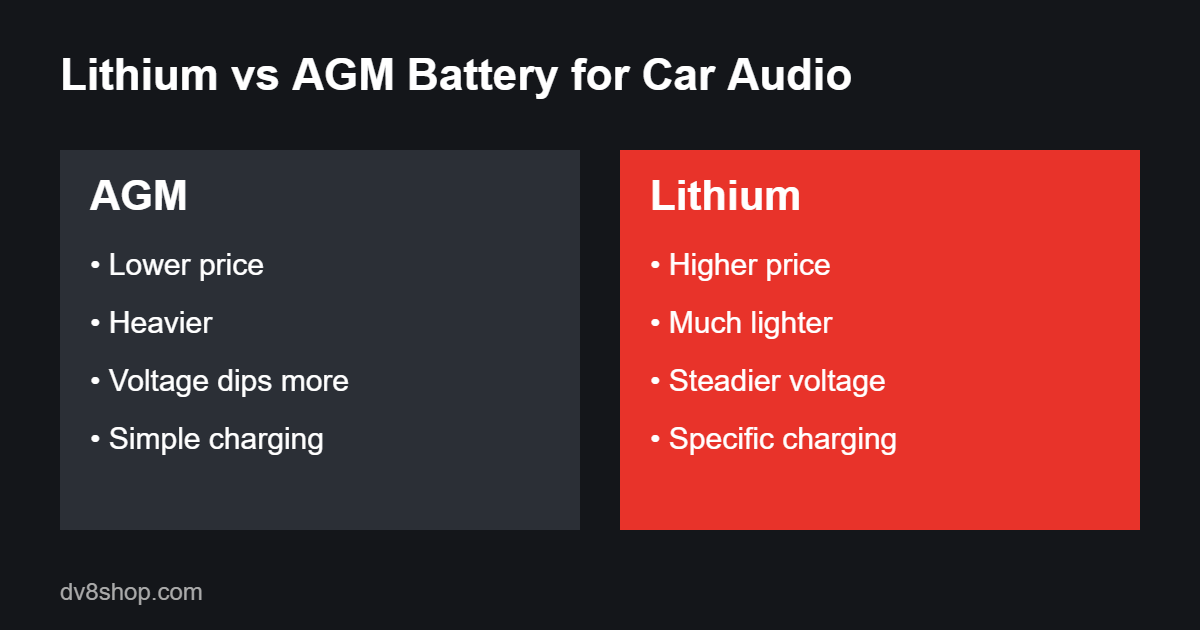
Lithium vs AGM battery for car audio: compare weight, voltage under load, lifespan and cost, and find out which one fits your system.
19 categories
20 brands
DV8
17 products / 2 categories
SoundQubed
125 products / 6 categories
Beyma
29 products / 2 categories
FI Car Audio
31 products
Every FI Car Audio product, together on one page.
Resilient Sounds
21 products / 2 categories
Stetsom
26 products
Every Stetsom product, together on one page.
Prodigy Audio
15 products / 2 categories
PRV Audio
189 products / 8 categories
Gately
50 products / 3 categories
Ruthless
17 products / 2 categories
Ill Customz
37 products / 2 categories
Limitless
17 products / 4 categories
BrandX
108 products / 5 categories
Galeforce
9 products / 2 categories
DS18
1,173 products / 15 categories
Nagy
11 products
Every Nagy product, together on one page.
Elite Sounds
7 products / 2 categories
Custom Speaker Pods
998 products / 4 categories
Voodoo Bikeworks
61 products / 9 categories
What size amp for a subwoofer is the question we get asked more than almost any other, and the answer starts with one number on the sub’s label.
Look at the sub’s RMS power rating. RMS is the power it can handle continuously. Ignore the big “peak” or “max” number printed in large type on the box, because it doesn’t tell you what the sub can really take.
A good rule is to pick an amp that makes about the same RMS power as the sub is rated for, or a little more. That gives the sub clean power with some headroom, which is better than a small amp that is pushed too hard.
Amp power changes with impedance. An amp might make 500 watts at 4 ohms and 800 watts at 2 ohms. So you need to check the rating at the impedance your sub will be wired to, not just the number on the front of the box.
If you aren’t sure how to get to that number, our guide on series vs parallel subwoofer wiring walks through it. You can also read about electrical impedance if you want the background.
| Sub RMS rating | Final impedance | Amp to look for |
|---|---|---|
| 300 watts | 4 ohms | 300 to 400 watts RMS at 4 ohms |
| 500 watts | 2 ohms | 500 to 650 watts RMS at 2 ohms |
| 1,000 watts | 1 ohm | 1,000 to 1,300 watts RMS at 1 ohm |
| Two 400 watt subs | 2 ohms | 800 to 1,000 watts RMS at 2 ohms |
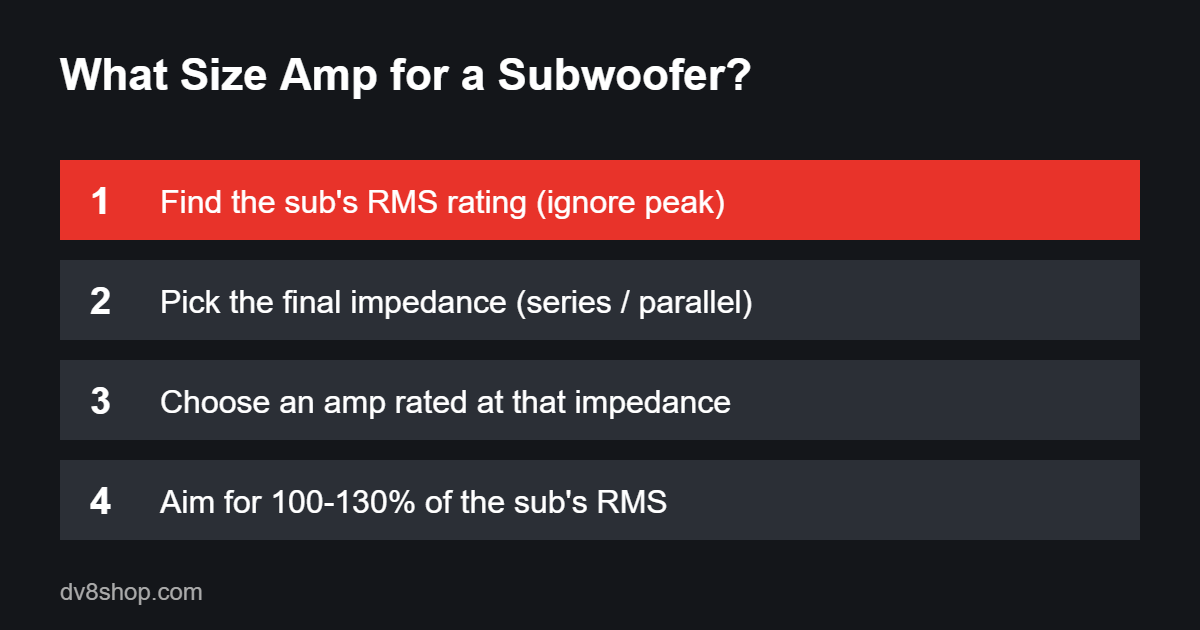
When you work out what size amp for a subwoofer suits you, a bit of extra power is a good thing. The amp runs relaxed. It can handle loud bass hits without clipping. Clipping is when the amp runs out of room and sends a distorted signal, and it kills subs faster than too much clean power does.
That said, don’t go wild. An amp far above the sub’s rating is easy to overdrive if you set the gain too high.
So what size amp for a subwoofer setup and which type? For a single sub or a pair, a mono Class D amp is the usual choice. It’s compact, efficient and runs cooler than older designs. A 4-channel amp can work if you bridge channels, but a mono amp is built for the job and usually simpler.
Whatever size amp for a subwoofer you pick, big amps need big wire and a healthy electrical system. If your lights dim when the bass hits, read our post on alternator whine and look into the big 3 upgrade. A strong supply is part of getting the amp you buy to perform.
The biggest mistake is shopping by the peak number on the box. The next is buying an amp that is too small and cranking the gain to make up for it, which causes clipping.
Also, check that the amp is stable at your final impedance. Some amps aren’t rated to run at 1 ohm, and wiring to a load they can’t handle will make them overheat.
Yes, if you set the gain properly. Too much power with a careless gain setting can damage the sub.
It’s safe if you keep the volume sensible, but the sub won’t reach its potential. Watch for clipping.
It’s the easiest option. Many 4-channel amps can be bridged to power a sub, but mono amps are designed for low impedance loads.
Check the spec sheet for the RMS rating at your impedance, not the peak figure.
If you’d like help matching an amp and sub, browse dv8shop.com or message us and we’ll point you to a good pair.
Lithium vs AGM battery for car audio: compare weight, voltage under load, lifespan and cost, and find out which one fits your system.
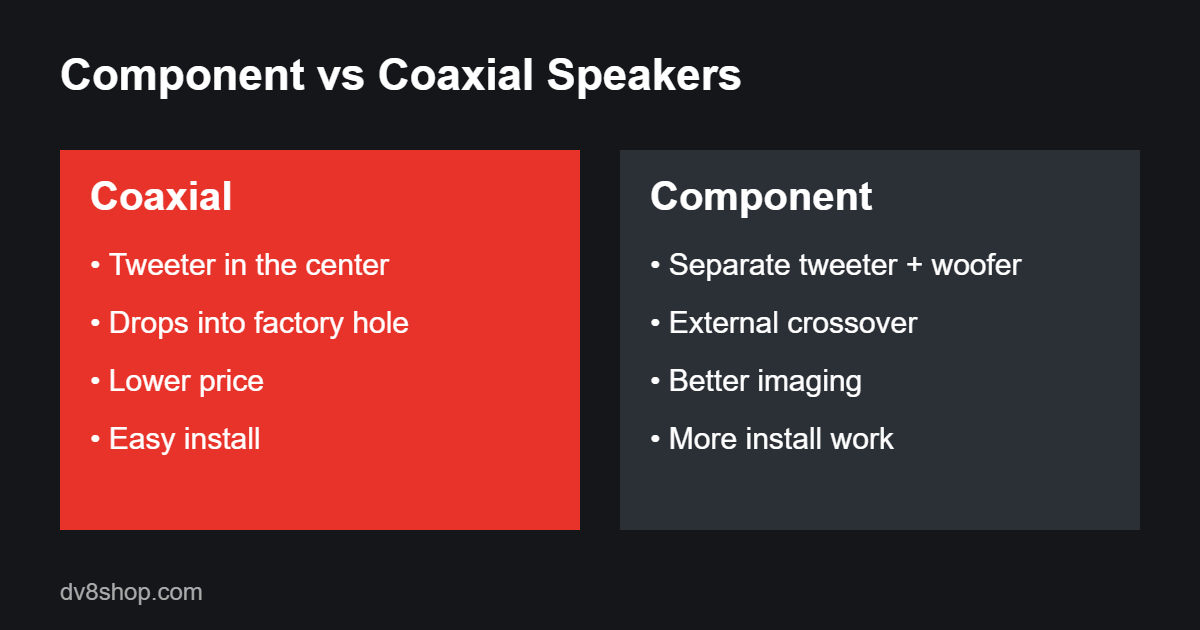
Component vs coaxial speakers explained: how each is built, how they sound, what installation takes, and which one to buy.
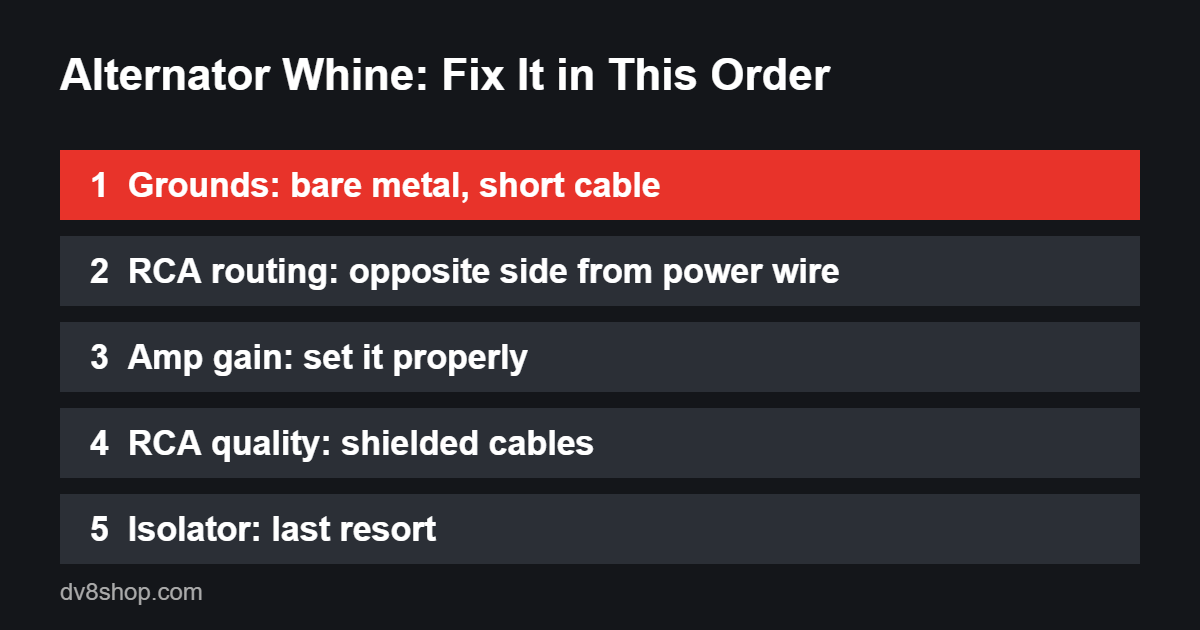
Alternator whine in car audio explained: what causes it, the 5 easiest fixes, and how to track down the noise step by step.