



Lithium vs AGM Battery for Car Audio: Which One Should You Buy?
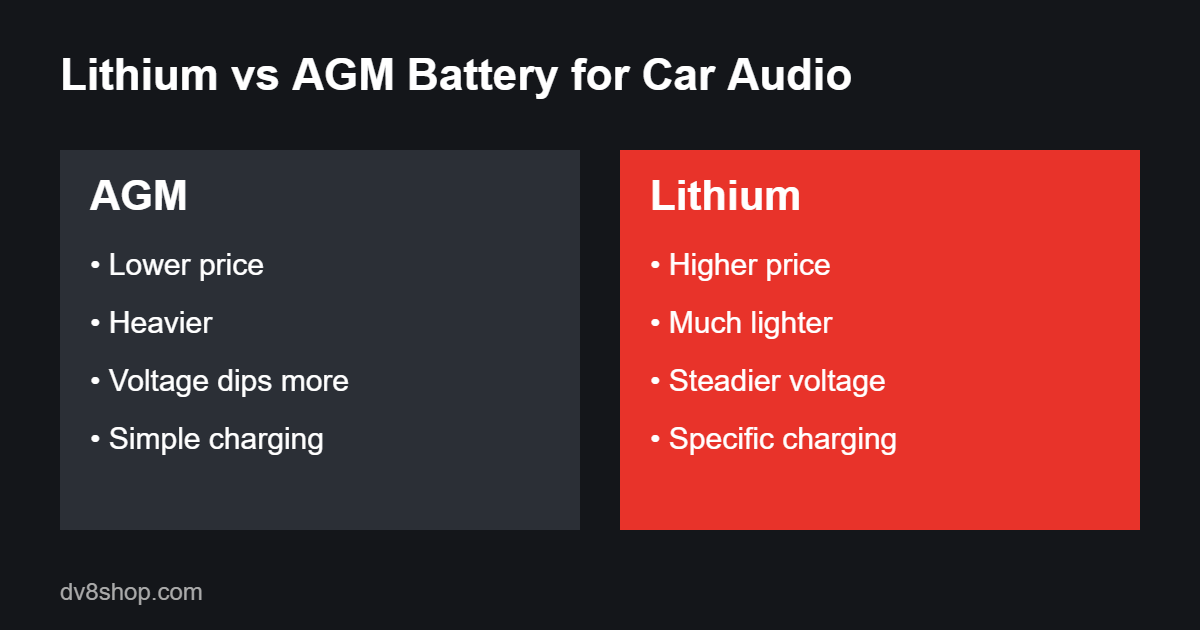
Lithium vs AGM battery for car audio: compare weight, voltage under load, lifespan and cost, and find out which one fits your system.
19 categories
20 brands
DV8
17 products / 2 categories
SoundQubed
125 products / 6 categories
Beyma
29 products / 2 categories
FI Car Audio
31 products
Every FI Car Audio product, together on one page.
Resilient Sounds
21 products / 2 categories
Stetsom
26 products
Every Stetsom product, together on one page.
Prodigy Audio
15 products / 2 categories
PRV Audio
189 products / 8 categories
Gately
50 products / 3 categories
Ruthless
17 products / 2 categories
Ill Customz
37 products / 2 categories
Limitless
17 products / 4 categories
BrandX
108 products / 5 categories
Galeforce
9 products / 2 categories
DS18
1,173 products / 15 categories
Nagy
11 products
Every Nagy product, together on one page.
Elite Sounds
7 products / 2 categories
Custom Speaker Pods
998 products / 4 categories
Voodoo Bikeworks
61 products / 9 categories

Mid-range vs mid-bass speakers is one of the most common questions in car audio. The world of car audio is rich with nuances, particularly when it comes to speaker types. Among the most crucial are mid-range and mid-bass speakers, each playing a unique role in delivering quality sound. Understanding their differences is key to achieving the perfect balance in your audio system.
Mid-range speakers are designed to handle the ‘middle’ frequencies of sound, typically ranging from 500 Hz to 4 kHz. This range includes most vocal sounds, as well as many musical instruments. Mid-range speakers are essential for clear, detailed reproduction of these frequencies, ensuring that the vocals and instruments in music are crisp and distinct.
Size: Usually smaller than mid-bass speakers, allowing for more flexible installation.
Frequency Range: Generally from 500 Hz to 4 kHz.
Sound Quality: Excel at reproducing clear and detailed vocal and instrumental sounds.

Mid-bass speakers, on the other hand, focus on lower frequency sounds, typically from 80 Hz to 500 Hz. This range covers the lower end of musical instruments and some of the deeper vocal tones. Mid-bass speakers are crucial for adding depth and warmth to music, giving it a fuller and richer sound.
For the best audio experience, especially in car audio systems, a combination of both mid-range and mid-bass speakers is often recommended. This approach ensures a full spectrum of sound, capturing both the clarity of vocals and instruments and the depth of lower frequencies.
When it comes to mid-range vs mid-bass speakers, both have their place in a high-quality audio system. By understanding their differences and strengths, you can tailor your audio setup to achieve the perfect blend of clarity, depth, and overall sound quality.
Mid-range speakers play roughly 500 Hz to 4 kHz, where most vocals and many instruments live. Mid-bass speakers play roughly 80 Hz to 500 Hz, where you get the warmth and punch of drums and the lower end of instruments. In the mid-range vs mid-bass speakers question, they simply cover different slices of the sound, which is why they work so well together.
You do not have to use both, but many systems do because each one is built for its own range. Most daily-driver builds start with a good set of door speakers and add a subwoofer. A dedicated mid-range and mid-bass setup is a step up from there when you want more clarity and detail.
No. A subwoofer takes over below the mid-bass range, so the two work as a team. We cover how they split the work in our subwoofers vs mid-bass speakers guide.
Tweeters play the highest frequencies, above the mid-range. See our tweeters and drivers guide for how they fit with the rest of the speakers, or browse speakers at dv8shop.com. For general background, here is an overview of the mid-range speaker.
Lithium vs AGM battery for car audio: compare weight, voltage under load, lifespan and cost, and find out which one fits your system.
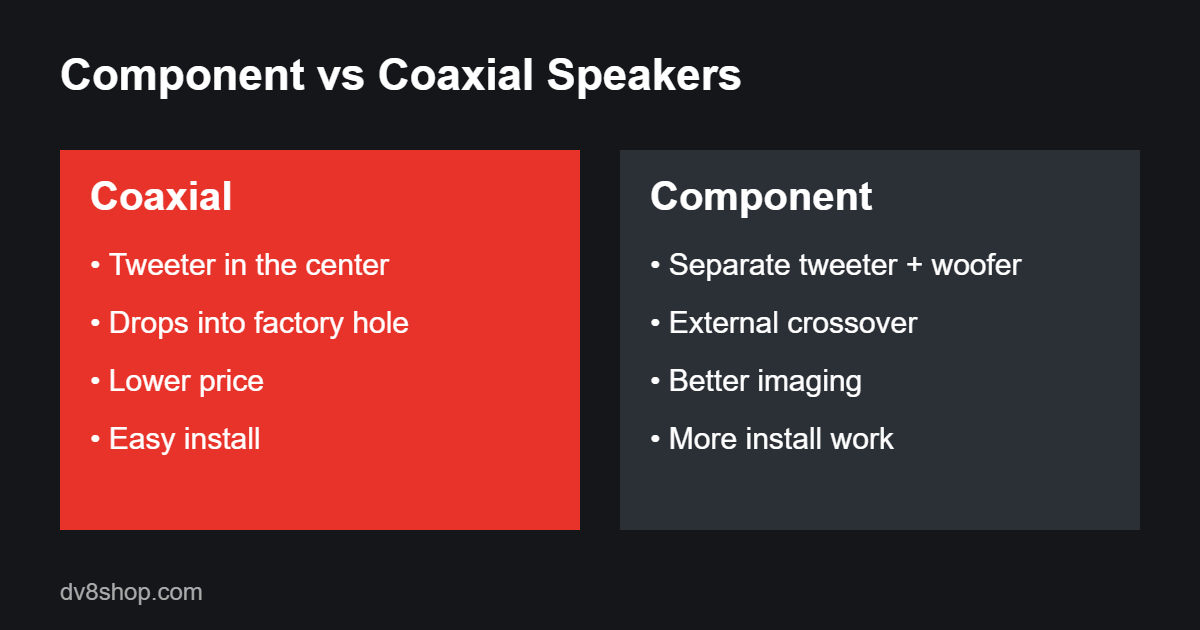
Component vs coaxial speakers explained: how each is built, how they sound, what installation takes, and which one to buy.
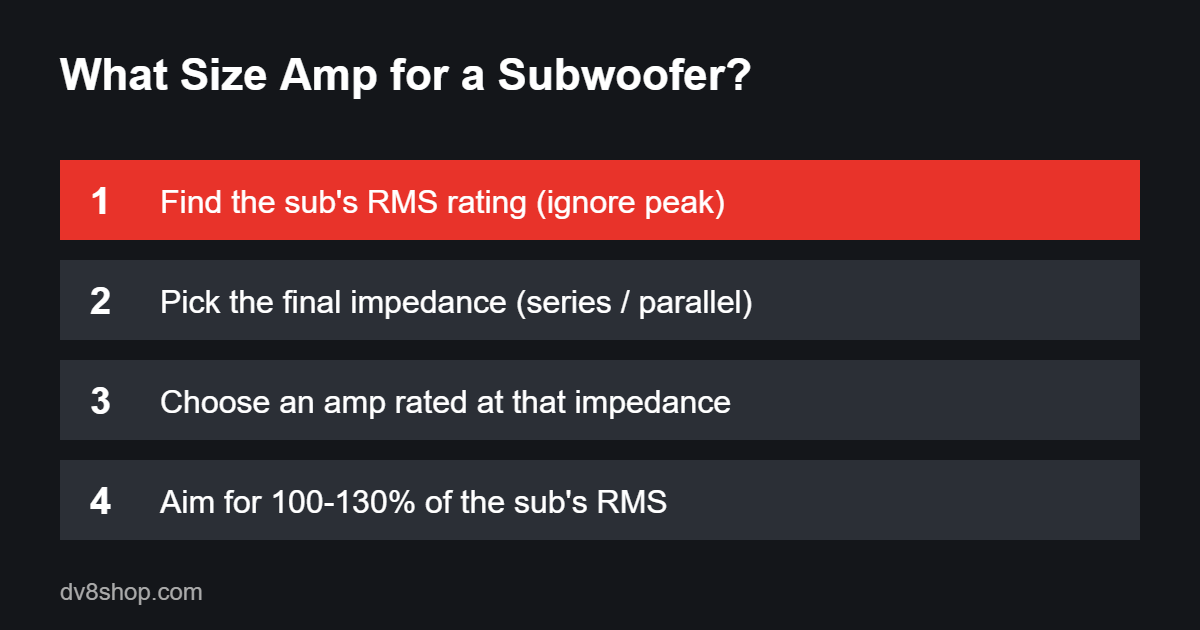
What size amp for a subwoofer? Learn how to match RMS power and impedance, with 4 easy examples and mistakes to avoid.