







Component vs Coaxial Speakers: Which Is Right for Your Car?
Component vs coaxial speakers explained: how each is built, how they sound, what installation takes, and which one to buy.
19 categories
20 brands
DV8
17 products / 2 categories
SoundQubed
125 products / 6 categories
Beyma
29 products / 2 categories
FI Car Audio
31 products
Every FI Car Audio product, together on one page.
Resilient Sounds
21 products / 2 categories
Stetsom
26 products
Every Stetsom product, together on one page.
Prodigy Audio
15 products / 2 categories
PRV Audio
189 products / 8 categories
Gately
50 products / 3 categories
Ruthless
17 products / 2 categories
Ill Customz
37 products / 2 categories
Limitless
17 products / 4 categories
BrandX
108 products / 5 categories
Galeforce
9 products / 2 categories
DS18
1,173 products / 15 categories
Nagy
11 products
Every Nagy product, together on one page.
Elite Sounds
7 products / 2 categories
Custom Speaker Pods
998 products / 4 categories
Voodoo Bikeworks
61 products / 9 categories
Lithium vs AGM battery is a hot topic in car audio, and the right answer depends on how hard your system works and how much you want to spend.
AGM stands for absorbent glass mat. It’s a sealed lead-acid battery, and it’s the go-to upgrade for a lot of audio systems. It handles heavy current well, doesn’t spill, and costs a lot less than lithium.
The tradeoff is weight. AGM batteries are heavy, and they lose voltage faster under a big load than lithium does.
Most car audio lithium batteries use lithium iron phosphate chemistry. You can read about it in this overview of the lithium iron phosphate battery. They’re much lighter than AGM and hold their voltage steadier when the amps pull hard.
They also charge quickly and have a long cycle life. The downside is price, and the fact that they have more particular charging needs.
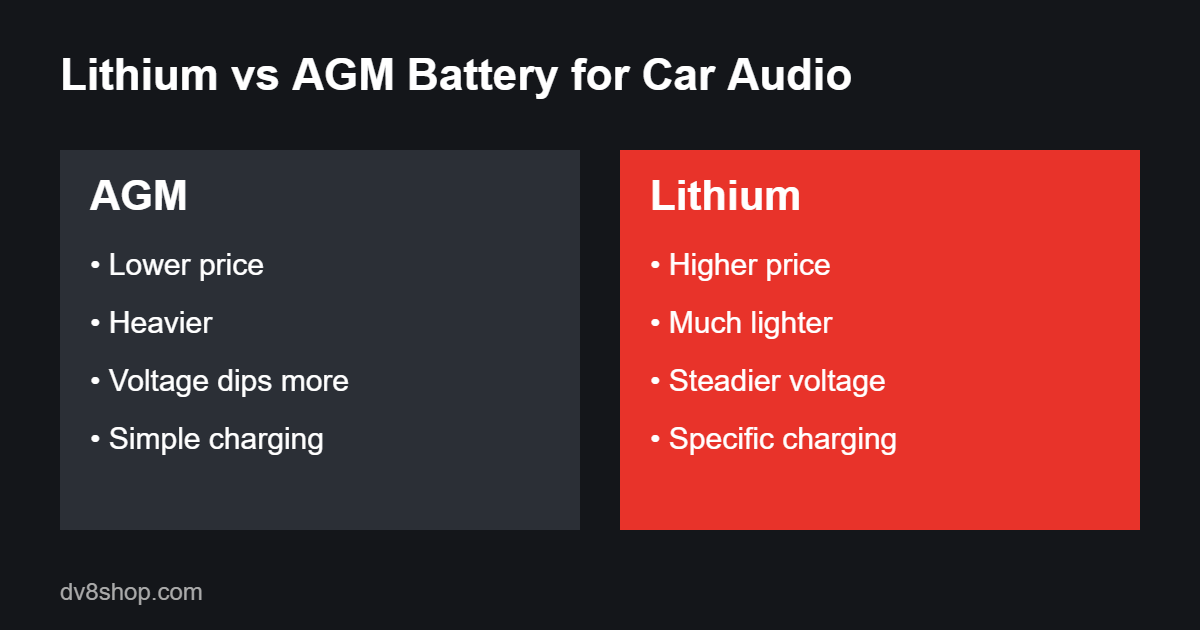
| Factor | AGM | Lithium |
|---|---|---|
| Weight | Heavy | Much lighter |
| Voltage under load | Drops more | Holds steadier |
| Price | Lower | Higher |
| Lifespan | Good | Often longer |
| Charging needs | Simple | More specific |
When a big amp hits a bass note, it pulls a lot of current at once. The battery voltage dips, and the amp has less to work with. That’s when bass loses punch and lights flicker.
In the lithium vs AGM battery debate, this is lithium’s best argument. Steadier voltage helps the amp make clean power. If your voltage is falling a lot, start with the cables, since the big 3 upgrade may fix more than a new battery will.
AGM is a great fit for most daily-driven systems up to a few thousand watts. It’s affordable, tough and works with a normal alternator. If you’re just getting into serious audio, start here.
Lithium makes sense for competition builds, very large systems, and anyone chasing weight savings. It’s also worth it if you run the system a lot with the engine off. Check the maker’s guidance on charging first, because not every lithium battery is a drop-in replacement for your car’s starting battery.
The biggest mistake is buying a battery to fix a problem that’s really in the wiring. A weak ground or thin power wire will hurt voltage no matter which battery you use.
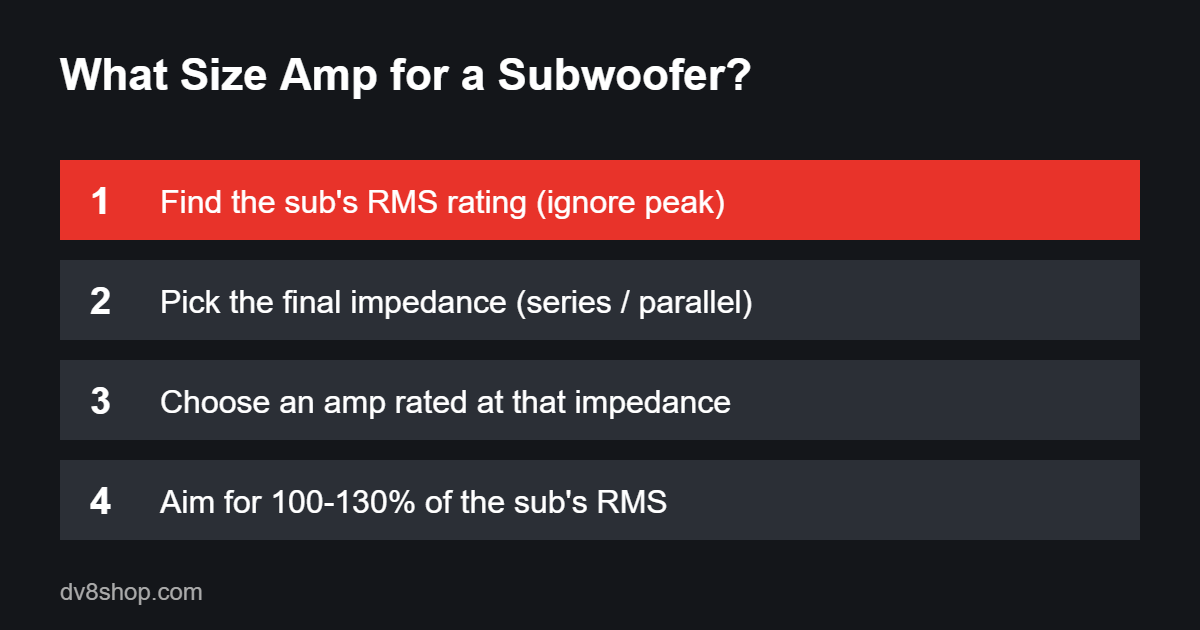
The next is skipping the charging system. A new battery can’t help if the alternator can’t keep up. Also, size your amp to your system with our guide on what size amp for a subwoofer, so you don’t ask for more current than you need.
For most people, AGM is the smart, affordable pick. For big power demands, tight weight limits or competition, lithium earns its price. Whichever side of the lithium vs AGM battery choice you land on, buy from a maker who gives clear charging and installation guidance.
It has advantages in weight and voltage stability, but it costs more. For many systems, AGM is plenty.
Only if the maker says it’s designed for it. Many lithium audio batteries are meant as a second battery.
Not directly. It can help the amp perform better if voltage is dropping under load.
If voltage falls a lot at normal volumes even after upgrading cables, a second battery may help.
Looking for batteries, cable or power distribution? Browse dv8shop.com or message us and we’ll help you sort out the right setup.
Component vs coaxial speakers explained: how each is built, how they sound, what installation takes, and which one to buy.
What size amp for a subwoofer? Learn how to match RMS power and impedance, with 4 easy examples and mistakes to avoid.
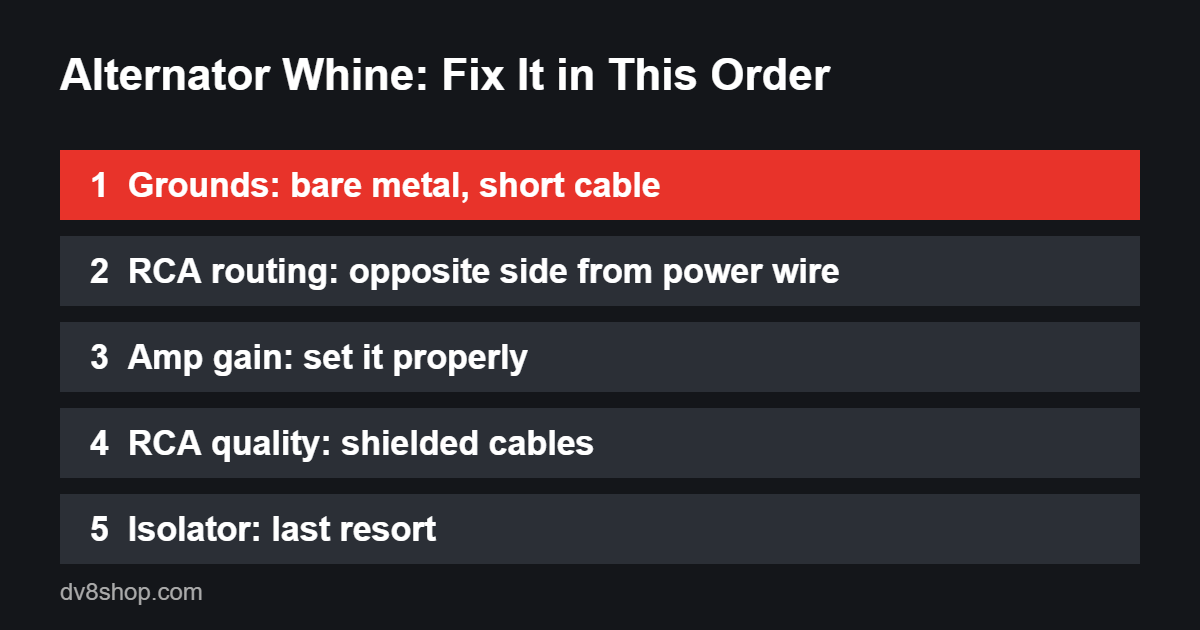
Alternator whine in car audio explained: what causes it, the 5 easiest fixes, and how to track down the noise step by step.