









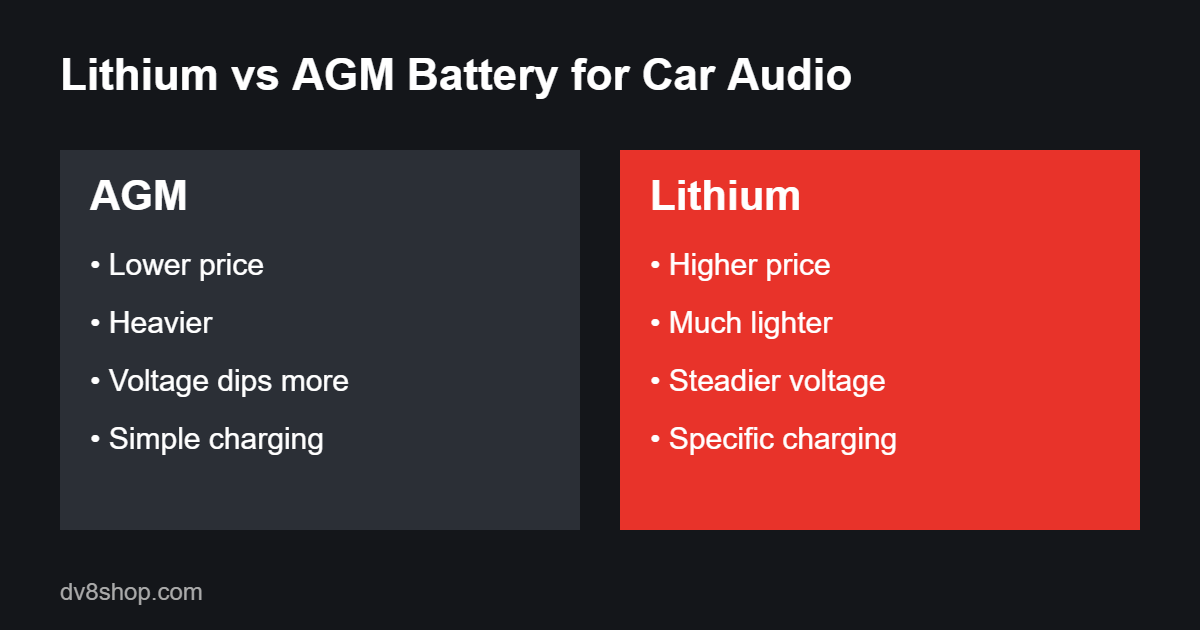
Lithium vs AGM Battery for Car Audio: Which One Should You Buy?
Lithium vs AGM battery for car audio: compare weight, voltage under load, lifespan and cost, and find out which one fits your system.
19 categories
20 brands
DV8
17 products / 2 categories
SoundQubed
125 products / 6 categories
Beyma
29 products / 2 categories
FI Car Audio
31 products
Every FI Car Audio product, together on one page.
Resilient Sounds
21 products / 2 categories
Stetsom
26 products
Every Stetsom product, together on one page.
Prodigy Audio
15 products / 2 categories
PRV Audio
189 products / 8 categories
Gately
50 products / 3 categories
Ruthless
17 products / 2 categories
Ill Customz
37 products / 2 categories
Limitless
17 products / 4 categories
BrandX
108 products / 5 categories
Galeforce
9 products / 2 categories
DS18
1,173 products / 15 categories
Nagy
11 products
Every Nagy product, together on one page.
Elite Sounds
7 products / 2 categories
Custom Speaker Pods
998 products / 4 categories
Voodoo Bikeworks
61 products / 9 categories
Subwoofer break in is the process of letting a brand new sub loosen up before you ask it to play at full volume.
A new sub is stiff. The spider and the surround, which are the parts that hold the cone and let it move, are tight from the factory. Playing music through the sub makes those parts flex, and over time they loosen and move more freely.
That’s all subwoofer break in is. You aren’t changing the sub. You’re letting the suspension settle in before you push it hard.
A stiff suspension changes how the sub behaves. A new sub can sound tight and a little shy, and its resonant frequency is often higher than it will be later. As it loosens, bass usually gets deeper and smoother.
It’s also about protecting the sub. Pushing a stiff, brand new driver hard on day one is a good way to damage it. Giving it time costs you nothing.
There’s no single number. Many manufacturers suggest somewhere around 20 to 40 hours of play, and some say more. Check the manual first, since it’s the one source that matches your sub.
| Stage | Volume | Content |
|---|---|---|
| First few hours | Low to moderate | Normal music with some bass |
| Next 10 to 20 hours | Moderate | Varied music, gradually more bass |
| After that | Up to your usual level | Anything, as long as the amp is clean |
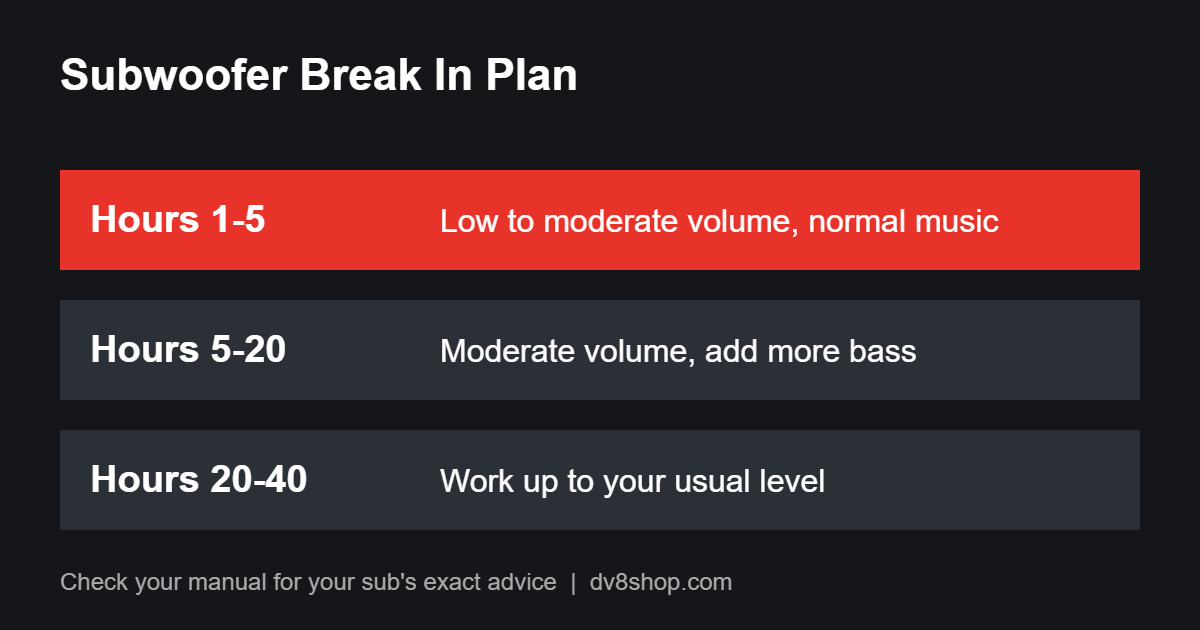
Start with your gains set properly and your bass boost turned off. Play regular music at a moderate volume and let it run. Driving around with your normal playlist works fine.
Raise the volume little by little over the first several hours. Don’t blast it. If you hear anything that sounds like bottoming out or rattling, turn it down and check the install. Our post on the car audio DSP shows how a processor can help you protect a sub with a proper filter.
You’ll usually notice the bass getting rounder and less tight-sounding after a few sessions. It may also play a bit lower than it did on day one. If it sounds worse, distorts or rattles, stop and check your gains and enclosure before going further.
The biggest mistake is going to full power on day one. A close second is running a sine wave tone for hours, which is hard on a sub and not needed. Normal music is better because it moves the cone through a range of motion.
Another one is skipping the box check. If the enclosure leaks or the sub isn’t mounted tight, you’ll hear rattles and chase the wrong problem. Make sure the sub is also getting clean power, since a clipped signal can hurt a driver faster than any break in schedule helps it. You can read more about how subwoofers work if you want the background.
It’s a safe habit. Opinions differ on how much it changes, but starting gently never hurts the sub.
A common range is 20 to 40 hours of normal playing. Follow your manufacturer’s advice if they give a number.
Yes. Regular music at moderate volume is the best way, because it moves the cone naturally.
Often, yes. Bass tends to get smoother and deeper as the suspension loosens.
If you’re shopping for a new sub or an amp to run it, browse dv8shop.com or message us and we’ll help you match them.
Lithium vs AGM battery for car audio: compare weight, voltage under load, lifespan and cost, and find out which one fits your system.
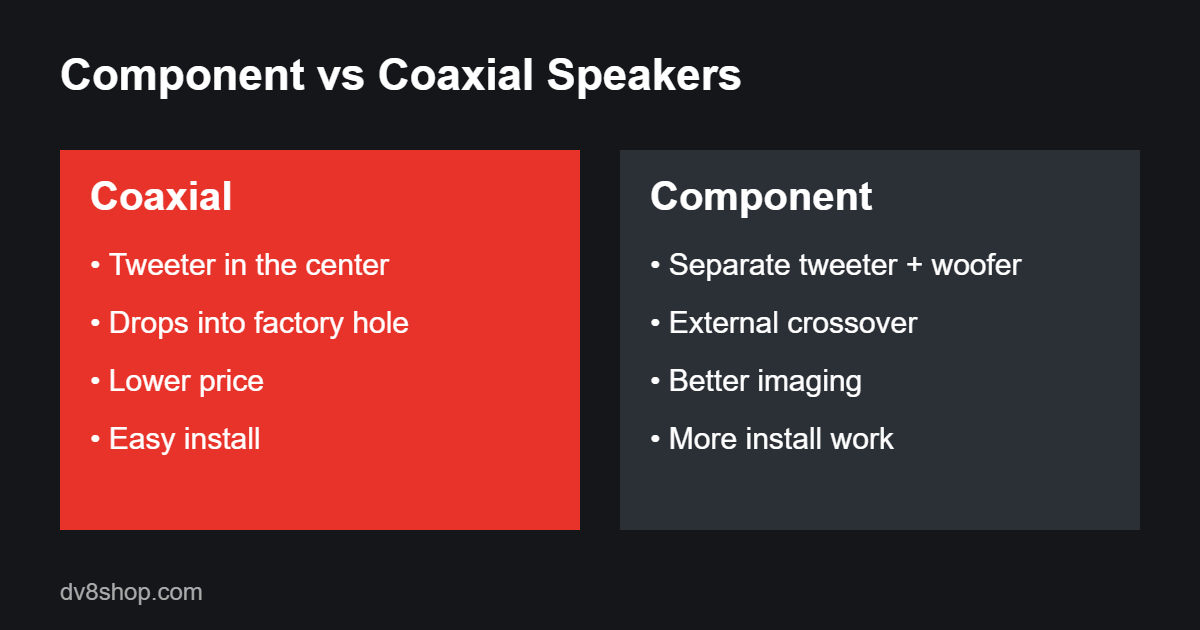
Component vs coaxial speakers explained: how each is built, how they sound, what installation takes, and which one to buy.
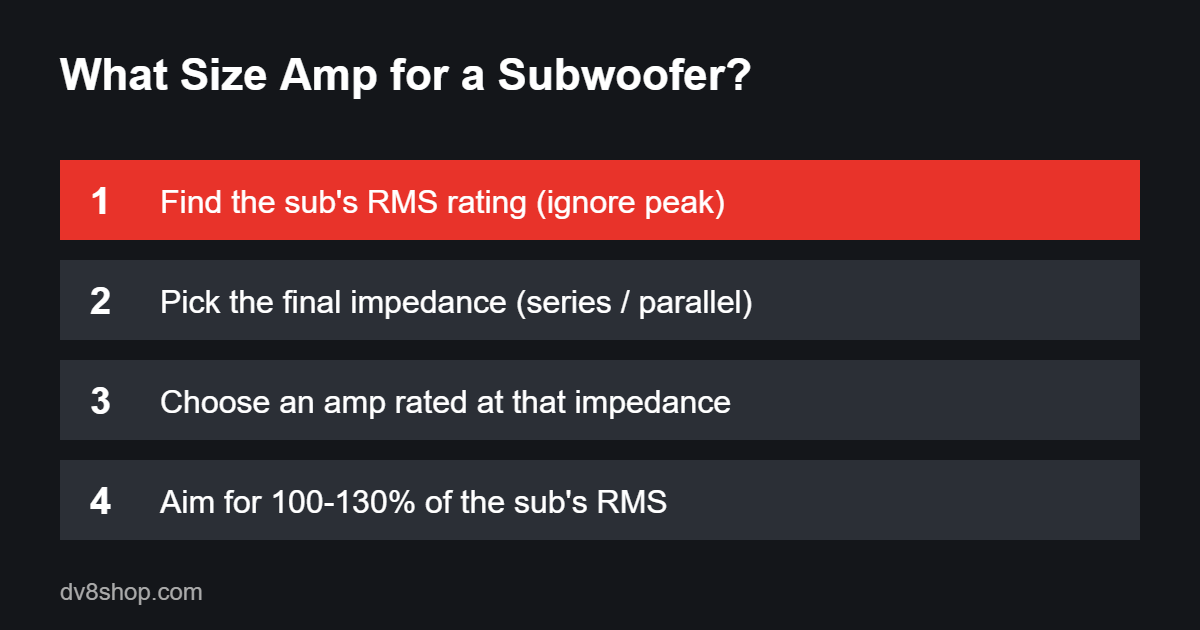
What size amp for a subwoofer? Learn how to match RMS power and impedance, with 4 easy examples and mistakes to avoid.