







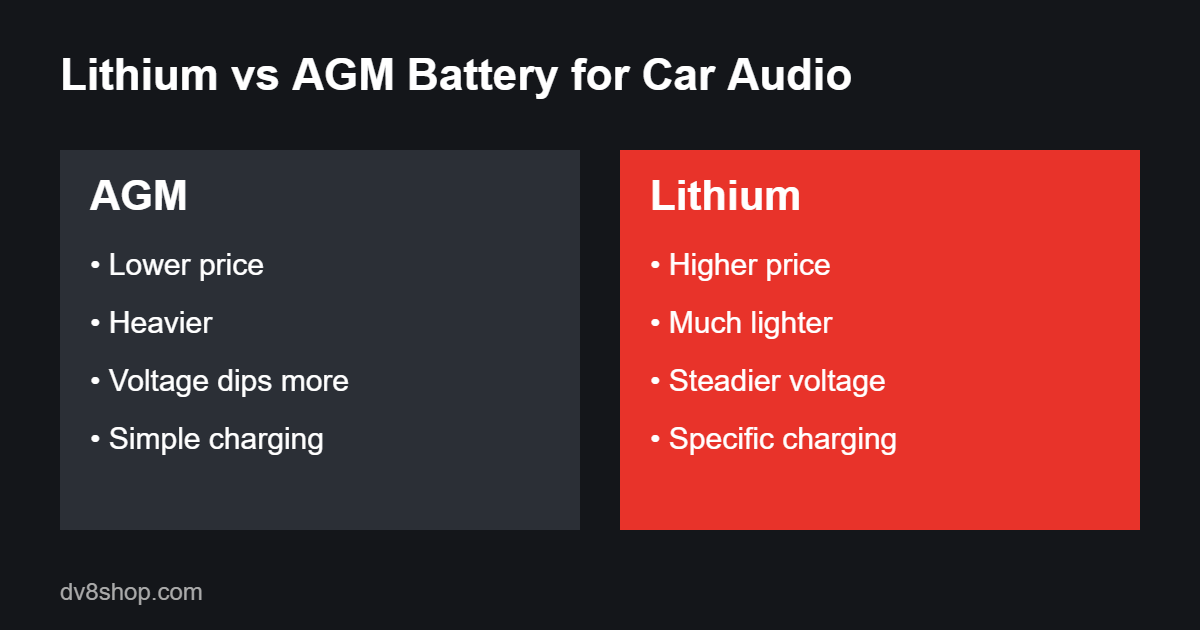
Lithium vs AGM Battery for Car Audio: Which One Should You Buy?
Lithium vs AGM battery for car audio: compare weight, voltage under load, lifespan and cost, and find out which one fits your system.
19 categories
20 brands
DV8
17 products / 2 categories
SoundQubed
125 products / 6 categories
Beyma
29 products / 2 categories
FI Car Audio
31 products
Every FI Car Audio product, together on one page.
Resilient Sounds
21 products / 2 categories
Stetsom
26 products
Every Stetsom product, together on one page.
Prodigy Audio
15 products / 2 categories
PRV Audio
189 products / 8 categories
Gately
50 products / 3 categories
Ruthless
17 products / 2 categories
Ill Customz
37 products / 2 categories
Limitless
17 products / 4 categories
BrandX
108 products / 5 categories
Galeforce
9 products / 2 categories
DS18
1,173 products / 15 categories
Nagy
11 products
Every Nagy product, together on one page.
Elite Sounds
7 products / 2 categories
Custom Speaker Pods
998 products / 4 categories
Voodoo Bikeworks
61 products / 9 categories
Component vs coaxial speakers is the first choice most people face when they swap out factory speakers, and the right pick depends on your budget and how much work you want to do.
A coaxial speaker, often called a full-range or 2-way speaker, puts everything in one unit. The tweeter sits in the middle of the woofer cone. You mount one speaker and connect one pair of wires.
They are easy to install, they fit most factory openings, and they cost less. That’s why most cars leave the factory with coaxial speakers.
Component speakers split the system into separate parts. You get a woofer, a separate tweeter, and an external crossover that sends the right frequencies to each driver.
The separate parts let you place the tweeter higher up, closer to ear level. That’s the main reason component sets tend to sound clearer and have better imaging. The idea is covered in this overview of a loudspeaker.
| Factor | Coaxial | Component |
|---|---|---|
| Sound quality | Good | Better clarity and imaging |
| Price | Lower | Higher |
| Installation | Easy, drops in | More work, separate parts |
| Tweeter placement | Fixed in the center | Can be aimed at you |
| Best for | Simple upgrades | Sound quality builds |
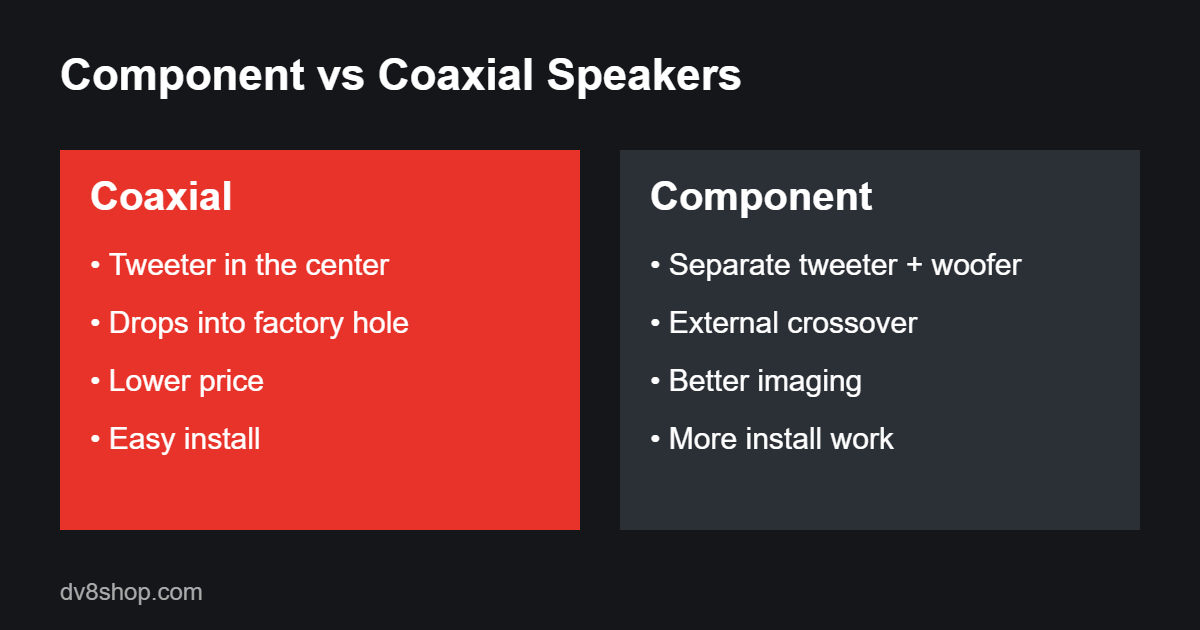
Coaxial speakers sound fine for background music and everyday driving. A good set is a big step up from factory paper cones.
Component speakers are where you start hearing the details. Vocals sit in front of you, and cymbals sound crisp instead of coming from your ankles. The difference is easiest to hear when the tweeters are aimed at the driver’s seat.
Coaxials usually go straight into the factory hole, sometimes with a cheap adapter bracket. Components take more time. You need a spot for each tweeter, a place for the crossover, and extra wiring.
Many people use the door sail panel or the A-pillar for the tweeter. Test a few positions before cutting or gluing anything. If you’re not comfortable doing that, a shop can handle it.
If you want a simple, affordable upgrade over factory speakers, coaxials are the easy answer. If you care about imaging and you’re willing to spend a bit more time on the install, components are worth it.
Either way, you’ll hear a real improvement. When you weigh component vs coaxial speakers, think about your budget, your car and how long you plan to keep it.
Both types will run off a head unit, but they sound better with an amp. Components in particular benefit from clean power. If you want to go further, a processor like the one in our car audio DSP guide lets you tune each speaker.
The biggest mistake is buying expensive components and not doing the door work. A speaker in a loose, rattling door won’t sound its best, so a bit of sound deadening matters.
The next is mismatching speaker size. Always check what fits your car before you buy. Also, don’t put the tweeter somewhere you can’t reach it with the crossover wire.
If sound quality matters to you, yes. They have better imaging and clarity than coaxials at a similar level.
Yes, but plan for extra wiring and a spot for the tweeters and crossovers.
Not required, but it helps. An amp gives cleaner power at higher volumes.
Coaxial speakers. They drop into the factory location with little extra work.
To compare options for your car, browse dv8shop.com or message us with your vehicle and we’ll help you choose.
Lithium vs AGM battery for car audio: compare weight, voltage under load, lifespan and cost, and find out which one fits your system.
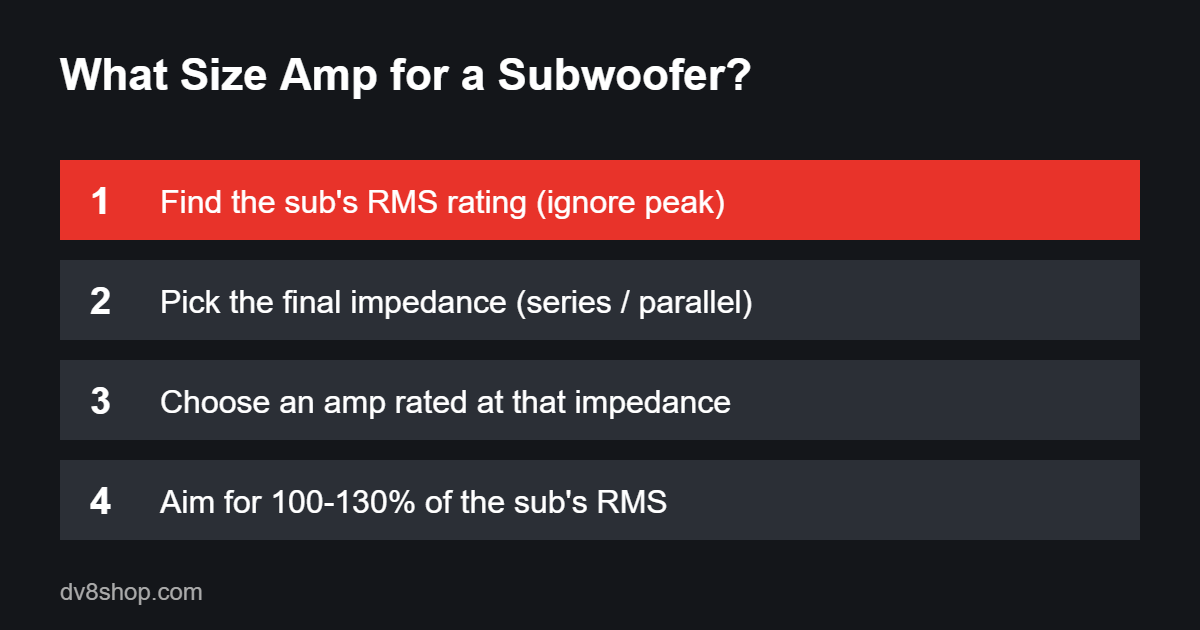
What size amp for a subwoofer? Learn how to match RMS power and impedance, with 4 easy examples and mistakes to avoid.
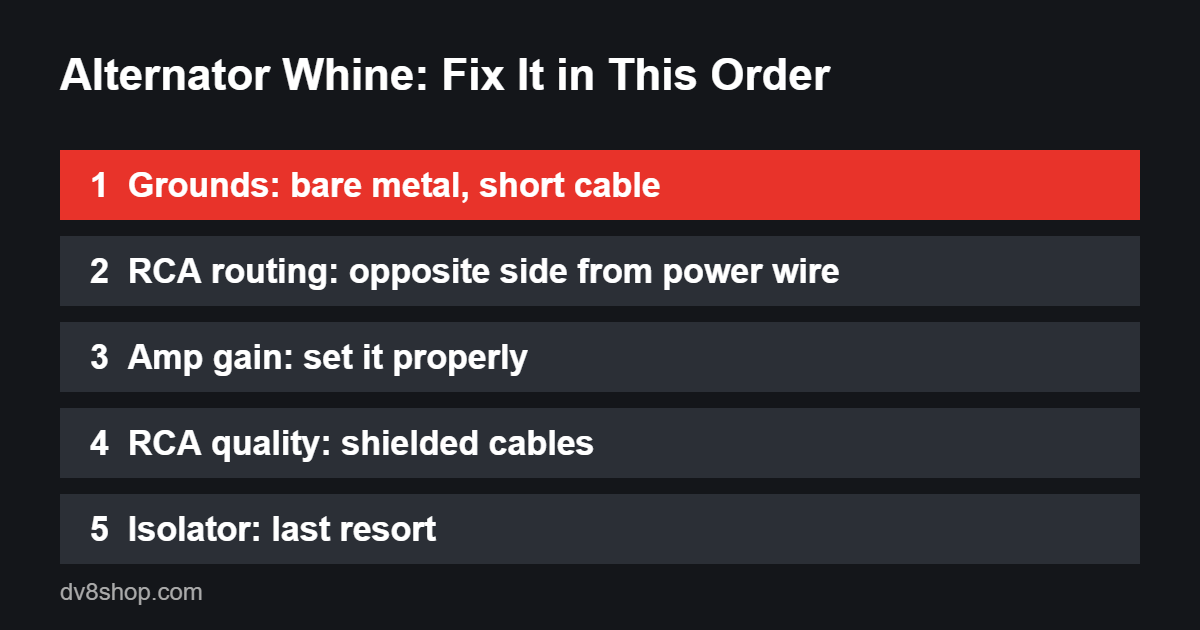
Alternator whine in car audio explained: what causes it, the 5 easiest fixes, and how to track down the noise step by step.