









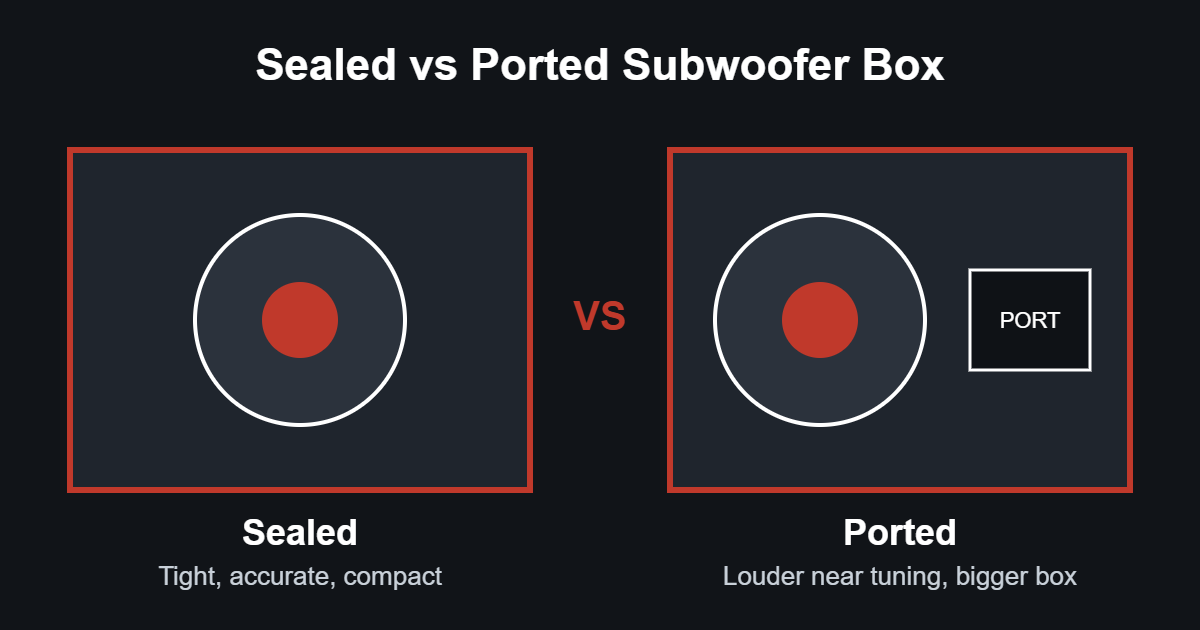
Sealed vs Ported Subwoofer Box: Which One Fits You?
Sealed or ported sub box? Here's how each one sounds, how much space they need, and which fits your music, your car and your…
19 categories
20 brands
DV8
17 products / 2 categories
SoundQubed
102 products / 6 categories
Beyma
29 products / 2 categories
Trinity
39 products / 3 categories
FI Car Audio
31 products
Every FI Car Audio product, together on one page.
Resilient Sounds
21 products / 2 categories
Stetsom
26 products
Every Stetsom product, together on one page.
Prodigy Audio
15 products / 2 categories
PRV Audio
189 products / 8 categories
Gately
50 products / 3 categories
Ruthless
17 products / 2 categories
Ill Customz
37 products / 2 categories
Limitless
17 products / 4 categories
BrandX
108 products / 5 categories
Galeforce
9 products / 2 categories
DS18
1,173 products / 15 categories
Nagy
11 products
Every Nagy product, together on one page.
Elite Sounds
7 products / 2 categories
Custom Speaker Pods
1,017 products / 4 categories
Car audio sound deadening is the cheapest upgrade most people skip, and it’s often the one that makes a mid-priced system sound like an expensive one.
Thin door skins and floor pans vibrate when your speakers and sub play. That vibration turns into rattles, buzzes and a muddy low end. Sound deadening mats add mass to the metal so it stops ringing. Less rattle means tighter bass and clearer mids at the same volume.
It also cuts road noise, which means you can listen at a lower volume and still hear everything. That’s good for your ears and your speakers.
If you only treat one area, make it the front doors. The speakers live there, and the outer door skin is a big flat panel that loves to vibrate.
You don’t need to cover every inch. Covering about 25 to 50 percent of the outer skin with butyl mat is usually enough to kill the ring. Tap the metal with your knuckle before and after. When it goes from a ring to a dull thud, you’re done.
| Area | What it helps | Priority |
|---|---|---|
| Front doors | Mid-bass clarity, rattles | First |
| Trunk or hatch floor and walls | Sub rattle, resonance | First if you run a sub |
| License plate area and trunk lid | Buzzing from bass | High |
| Floor | Road noise | Medium |
| Roof | Road and rain noise | Low |
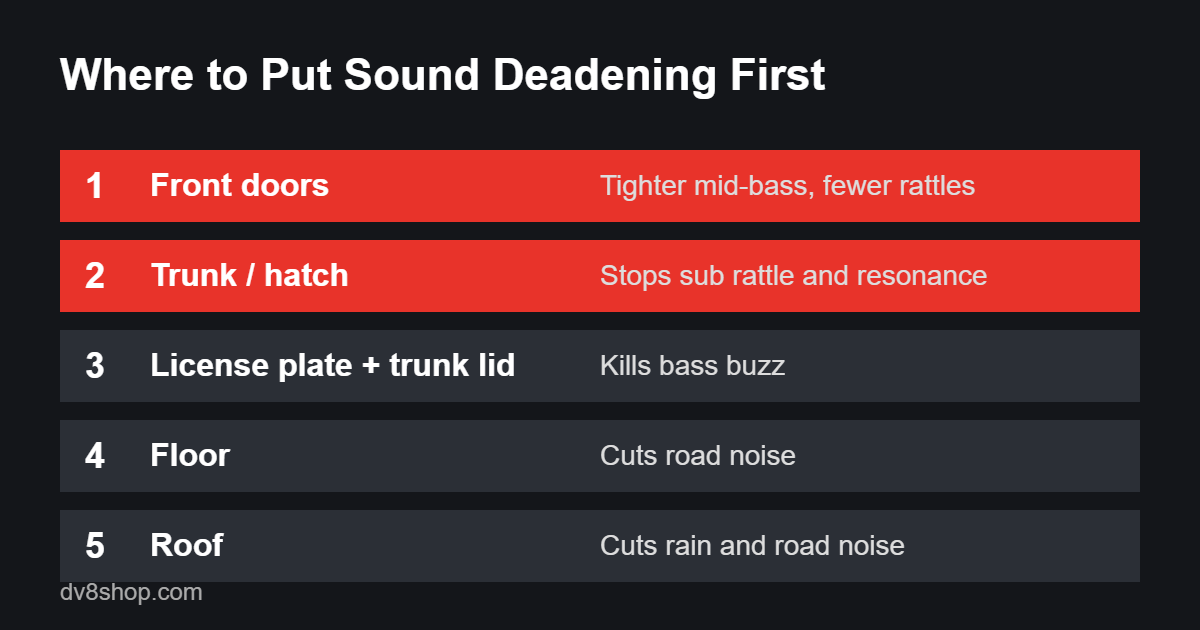
If you’ve got a subwoofer, the trunk or hatch is where most of the annoying rattles come from. The license plate, the trunk lid and loose trim panels are the usual suspects. A little mat on the lid and some foam where panels touch metal fixes most of it.
Before you blame the sub, check the box too. A good enclosure matters, and our post on sealed vs ported subwoofer boxes can help you pick one that suits your music.
There are two jobs here. Butyl mat adds mass and stops metal from vibrating. Closed-cell foam fills gaps and stops plastic panels from buzzing against each other. Most installs use both, and they don’t replace each other.
Skip anything that’s just sold as a thin sticker. If it doesn’t have real weight, it won’t do much. A good butyl mat feels heavy for its size.
The big one is covering every surface with mat and wasting money. More mat isn’t always better. After the metal stops ringing, extra coverage gives you very little.
The next is skipping prep. Dirt and grease keep mat from sticking, so wipe the metal with a cleaner first. Press the mat down with a roller so it conforms to the shape of the panel. Also, don’t block the door’s drain holes, or water will sit inside and rust the door.
For a pair of front doors, plan on roughly 10 to 12 square feet of mat. A hatch or trunk with a sub takes more. Measure first and buy a little extra, because you’ll always find one more panel to cover.
Yes. It reduces panel vibration and road noise, so bass sounds tighter and details come through more clearly.
Start with the front doors, then the trunk or hatch if you have a subwoofer.
It is. Doors are a big part of how component and coaxial speakers sound, and the quieter cabin helps any system.
A pair of doors is usually a few hours the first time. Take your time with the panel clips.
Once the car is quiet, speakers and amps show what they can really do. You can browse speakers, amps and subs at dv8shop.com, or read more on the basics from this soundproofing overview.
Sealed or ported sub box? Here's how each one sounds, how much space they need, and which fits your music, your car and your…
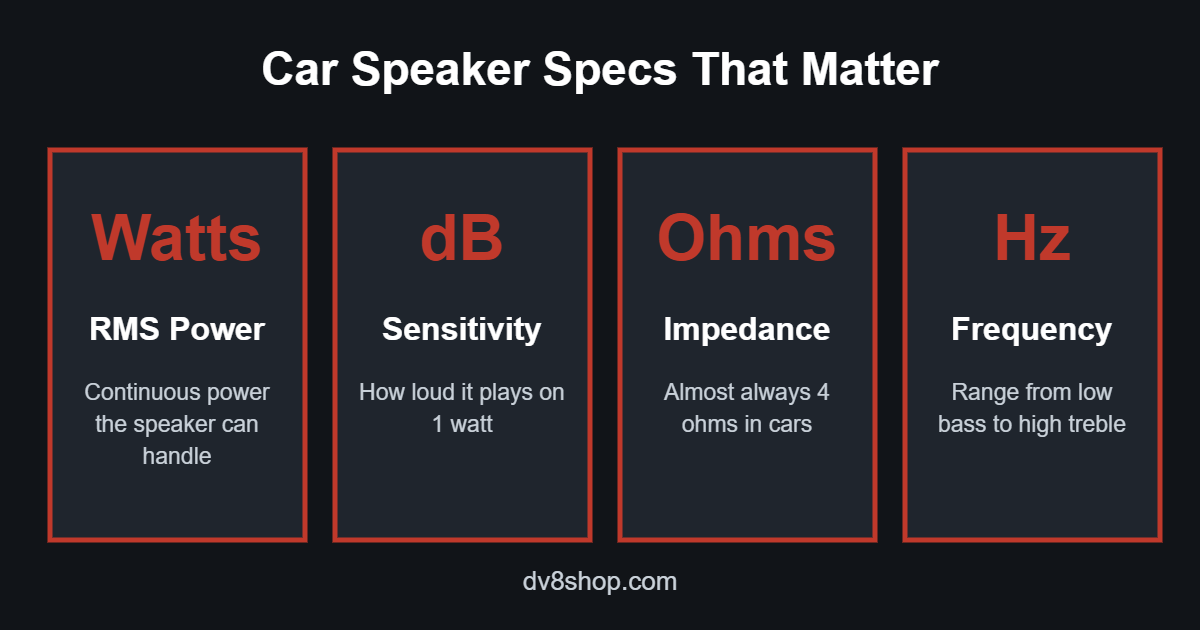
Confused by car speaker specs? Learn what RMS power, sensitivity and impedance mean and how to match speakers to your amp or stereo.
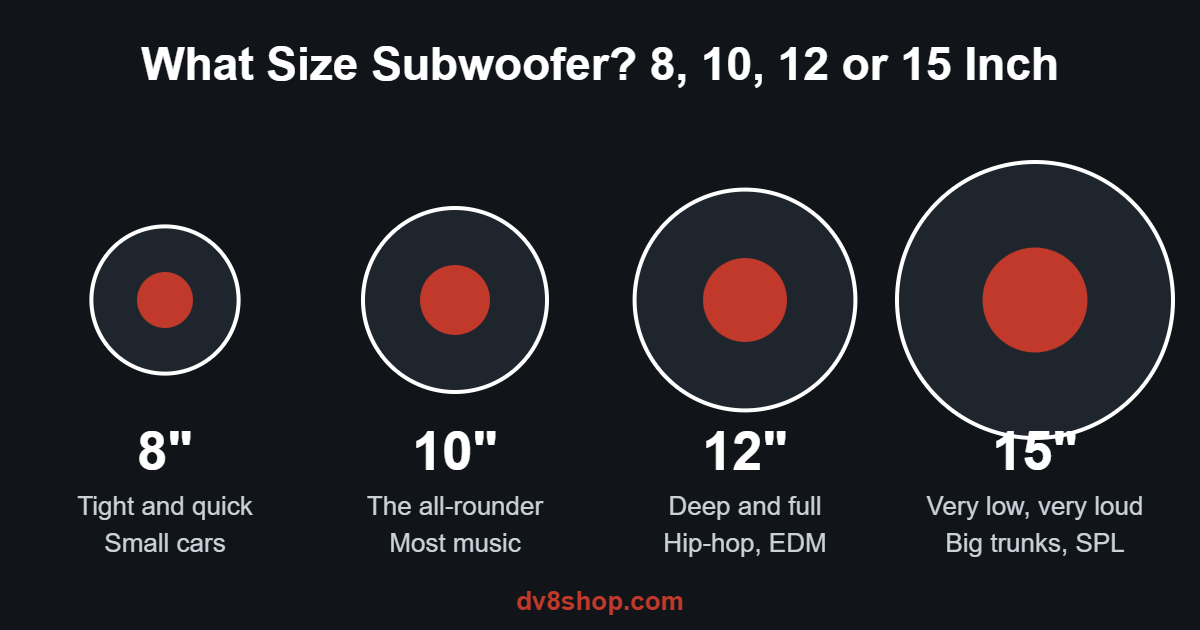
Not sure what size subwoofer to buy? Here's how 8, 10, 12 and 15 inch subs sound and which one fits your car, music…