





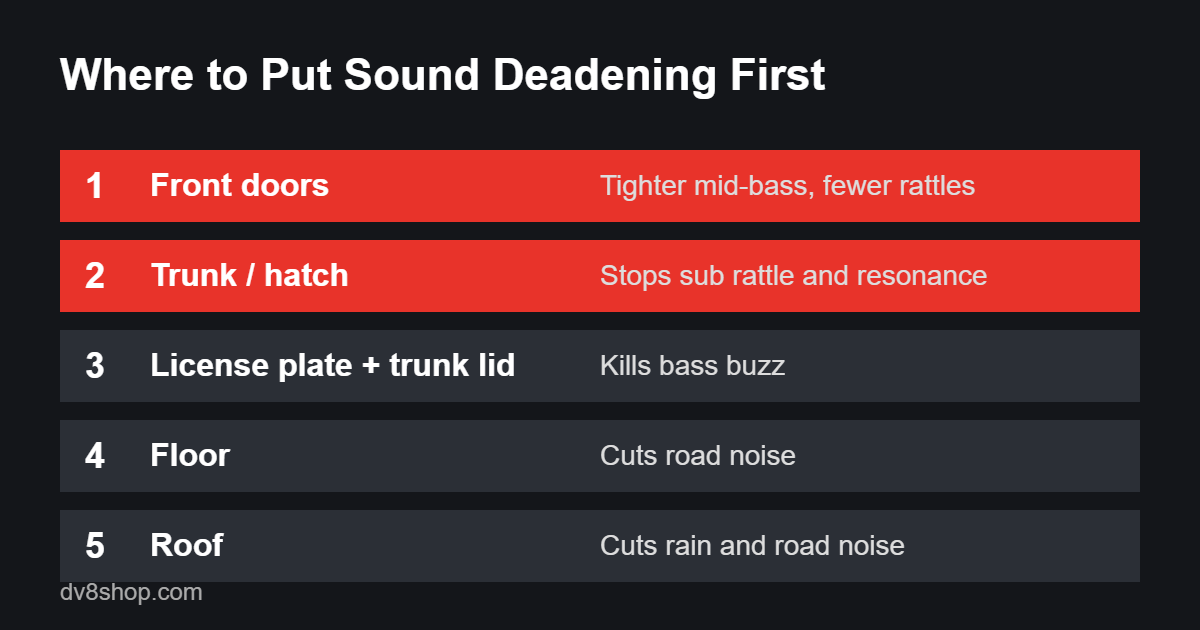
Car Audio Sound Deadening: Where to Start and What to Skip
Car audio sound deadening explained: which panels matter most, how much material you really need, and 5 easy mistakes to avoid.
19 categories
20 brands
DV8
17 products / 2 categories
SoundQubed
102 products / 6 categories
Beyma
29 products / 2 categories
Trinity
39 products / 3 categories
FI Car Audio
31 products
Every FI Car Audio product, together on one page.
Resilient Sounds
21 products / 2 categories
Stetsom
26 products
Every Stetsom product, together on one page.
Prodigy Audio
15 products / 2 categories
PRV Audio
189 products / 8 categories
Gately
50 products / 3 categories
Ruthless
17 products / 2 categories
Ill Customz
37 products / 2 categories
Limitless
17 products / 4 categories
BrandX
108 products / 5 categories
Galeforce
9 products / 2 categories
DS18
1,173 products / 15 categories
Nagy
11 products
Every Nagy product, together on one page.
Elite Sounds
7 products / 2 categories
Custom Speaker Pods
1,017 products / 4 categories
The sealed vs ported subwoofer box question comes down to this: a sealed box sounds tighter and fits in less space, and a ported box gets louder on the same power but eats more of your trunk. Which one is right for you depends on your music, your car and how loud you want to go.
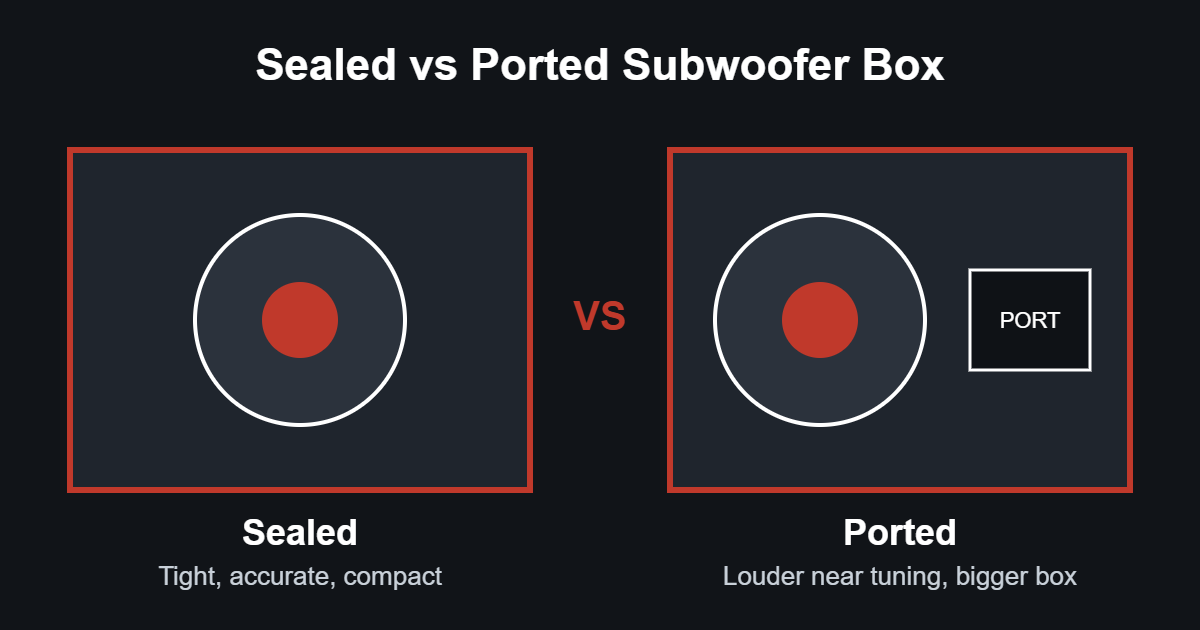
A sealed box is exactly what it sounds like. It’s an airtight box with the sub mounted in it and nowhere for the air to go. That trapped air acts like a spring behind the cone, pushing back every time the sub moves. The result is a lot of control. When a note stops, the bass stops with it, which is why kick drums and fast double bass sound clean in a sealed setup.
Sealed boxes roll off gently as you go lower, and inside a car you also get cabin gain, a natural boost in the low end from the small space. Put those together and a good sealed box plays lower than most people expect. The trade-off is efficiency. You’ll need more amp power to get the same volume a ported box gives you.
A ported box has a vent, either a slot built from wood or a round aero port. The air in that port resonates at a specific frequency, called the tuning frequency, and that adds a big chunk of output right around that note. That’s the “slam” people talk about with ported setups. If you want the physics behind it, Wikipedia has a good overview of loudspeaker enclosures.
Here’s the catch. Below the tuning frequency the port stops helping and the cone basically unloads. It moves way more than it should for very little sound, and that’s how subs get damaged. If you run ported, use a subsonic filter set a few hertz below your tuning. Most daily ported boxes are tuned somewhere in the low to mid 30s Hz. Boxes built purely for SPL scores are usually tuned higher, matched to where that specific vehicle peaks.
| Sealed | Ported | |
|---|---|---|
| Box size | Smaller | Bigger (the port takes up volume too) |
| Sound | Tight, accurate, punchy | Louder, deeper boom near tuning |
| Power needed | More watts for the same volume | More output per watt near tuning |
| Below tuning | Rolls off gradually | Drops off fast, needs a subsonic filter |
| Build difficulty | Easy, just measure and seal it | Port size and length have to be calculated |
| Good for | Rock, metal, country, SQ builds, small cars | Rap, hip-hop, EDM, daily loud builds, SPL |
In the sealed vs ported subwoofer box decision, go sealed if trunk space matters, you listen to a mix of everything, or you care more about how the bass sounds than how loud it measures. It’s also the safer pick if you’re building your first box, since there’s no port math to get wrong.
On the other side of the sealed vs ported subwoofer box choice, go ported if you want the most volume out of your amp, you mostly play bass heavy music, or you’re thinking about competing. Almost every serious SPL build runs a ported or bandpass box for a reason. If you’re curious about that side of things, we have a separate post on 4th order enclosures on the DV8 blog.
One honest opinion on any sealed vs ported subwoofer box build: a well built sealed box beats a badly built ported box every time. Pick the one you can build right.
In a sealed vs ported subwoofer box setup, ported gets louder around its tuning, so it usually feels deeper on bass heavy tracks. Sealed can still dig low in a car thanks to cabin gain, it just won’t be as loud down there on the same power.
Not always. Some subs are designed for sealed, some for ported, and many work in both. Check the spec sheet. If you want to go a step further, look at the sub’s Thiele/Small numbers. A common rule of thumb is that subs with an EBP (Fs divided by Qes) under about 50 lean sealed, and above about 100 lean ported.
Near the tuning frequency, yes. That’s where most of the extra output lives. Away from tuning, the difference is smaller than people think.
Sometimes, if the box is big enough to give up space for a port. In most cases it’s easier and sounds better to build a new box designed for ported from the start.
There’s no wrong answer in the sealed vs ported subwoofer box debate, only the wrong box for your goals. Figure out how much space you can give up and what you want the bass to do, and the choice usually makes itself. When you’re ready to pick out a sub or an amp to match, take a look around dv8shop.com, and reach out if you want a second opinion on your setup.
Car audio sound deadening explained: which panels matter most, how much material you really need, and 5 easy mistakes to avoid.
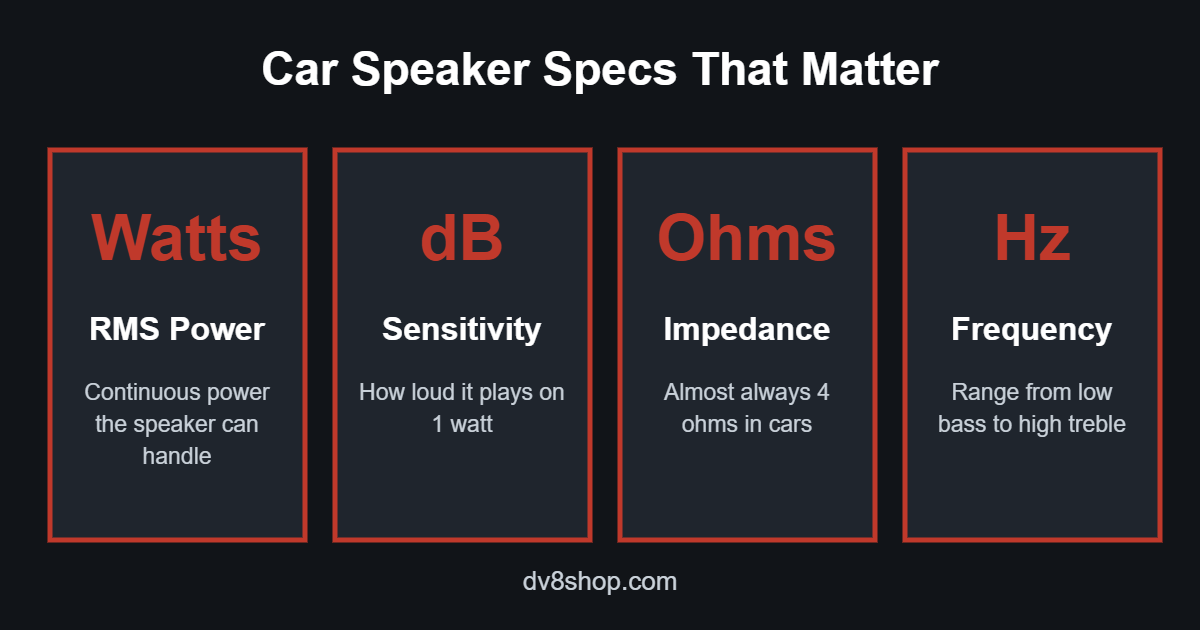
Confused by car speaker specs? Learn what RMS power, sensitivity and impedance mean and how to match speakers to your amp or stereo.
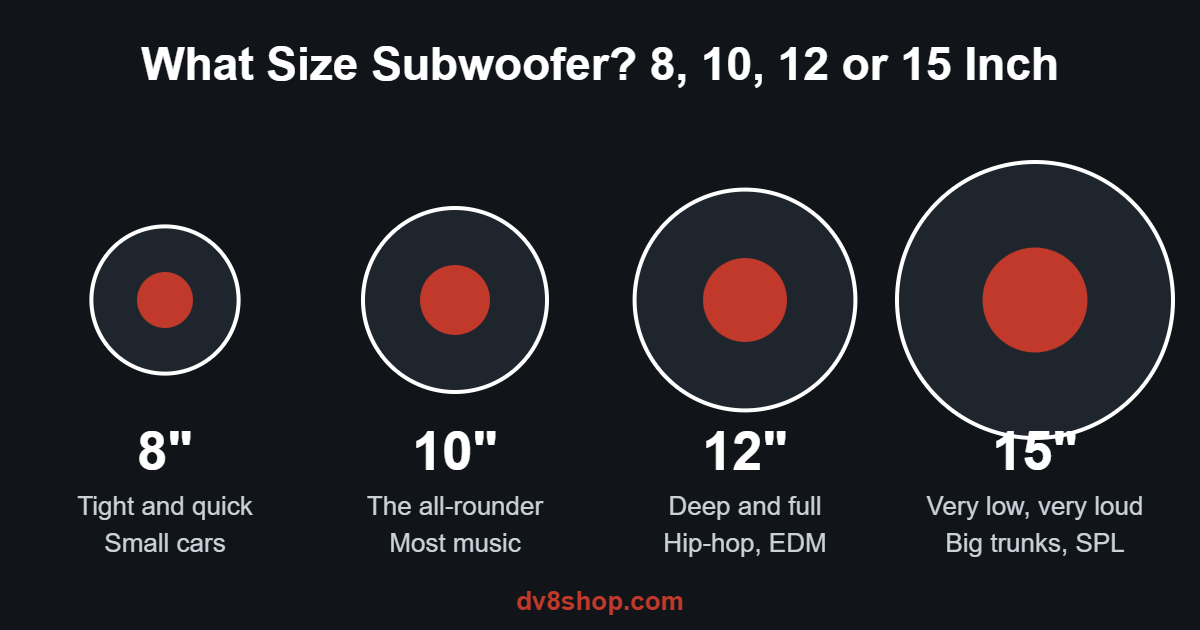
Not sure what size subwoofer to buy? Here's how 8, 10, 12 and 15 inch subs sound and which one fits your car, music…