





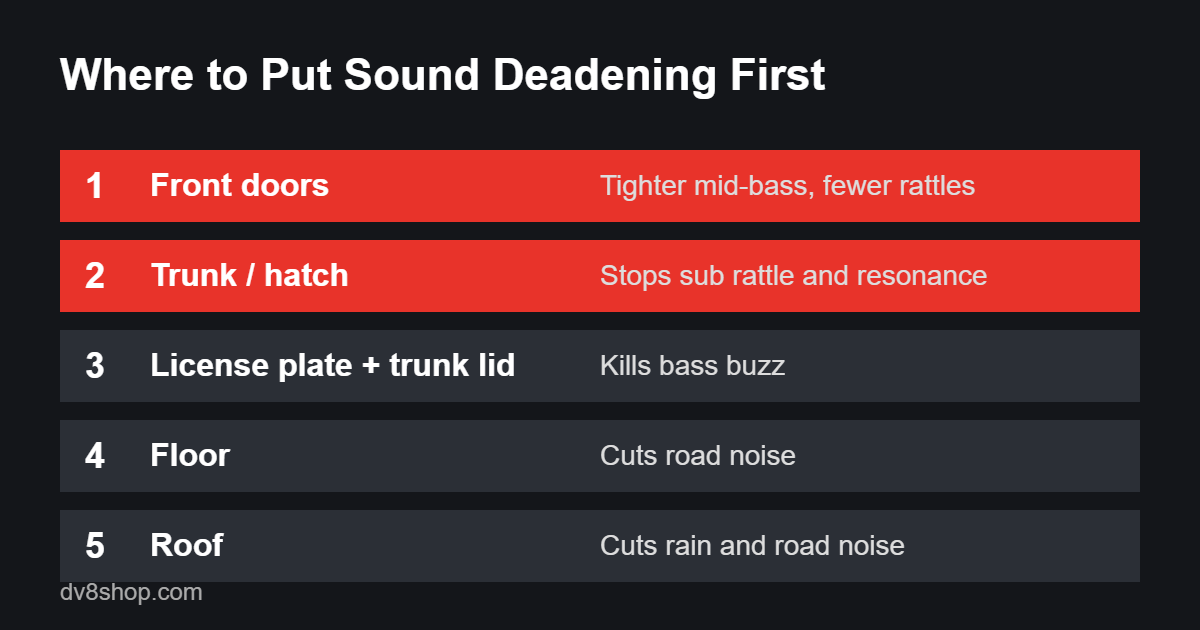
Car Audio Sound Deadening: Where to Start and What to Skip
Car audio sound deadening explained: which panels matter most, how much material you really need, and 5 easy mistakes to avoid.
19 categories
20 brands
DV8
17 products / 2 categories
SoundQubed
102 products / 6 categories
Beyma
29 products / 2 categories
Trinity
39 products / 3 categories
FI Car Audio
31 products
Every FI Car Audio product, together on one page.
Resilient Sounds
21 products / 2 categories
Stetsom
26 products
Every Stetsom product, together on one page.
Prodigy Audio
15 products / 2 categories
PRV Audio
189 products / 8 categories
Gately
50 products / 3 categories
Ruthless
17 products / 2 categories
Ill Customz
37 products / 2 categories
Limitless
17 products / 4 categories
BrandX
108 products / 5 categories
Galeforce
9 products / 2 categories
DS18
1,173 products / 15 categories
Nagy
11 products
Every Nagy product, together on one page.
Elite Sounds
7 products / 2 categories
Custom Speaker Pods
1,017 products / 4 categories
What size subwoofer should you get? It’s the most common question we hear, and the answer depends on your music, your trunk, and your budget. A 15 isn’t better than a 10, it’s just different. Here’s how to pick.
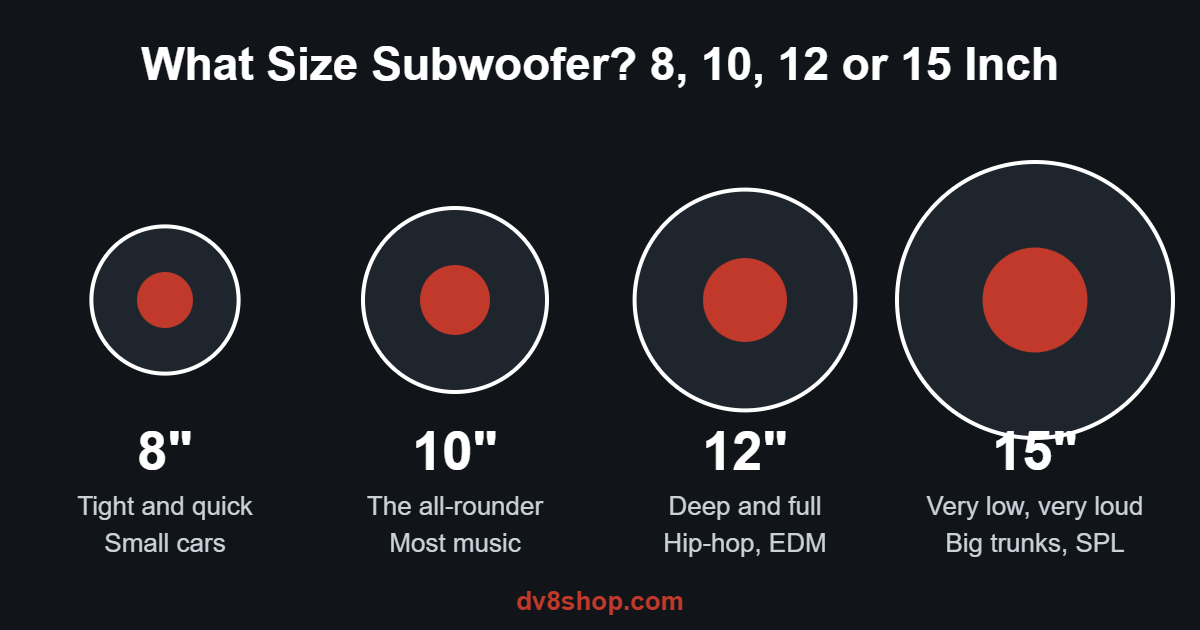
| Size | Sound | Good for | Watch out for |
|---|---|---|---|
| 8 inch | Tight, quick, punchy | Small cars, rock, country, saving space | Won’t shake the mirrors on its own |
| 10 inch | Tight with some extra depth | The all-rounder, most music types | Fine for most people, so a safe bet |
| 12 inch | Deep and full | Hip-hop, EDM, movie-style bass | Needs a bigger box and more power |
| 15 inch | Very low and loud | Big trunks, SPL fans | Eats trunk space, can sound slow if the box is wrong |
When you’re picking what size subwoofer to buy: if you mostly listen to rock, country or podcasts, a 10 will make you happy. For hip-hop, EDM or anything with long low notes, a 12 is where most people end up. Smaller subs respond faster, so they keep up with fast kick drums. Bigger subs move more air, so they go lower and hit harder.
One thing people forget when asking what size subwoofer to buy: two small subs can beat one big one. Two 10s will usually outplay a single 12 and often give you better control.
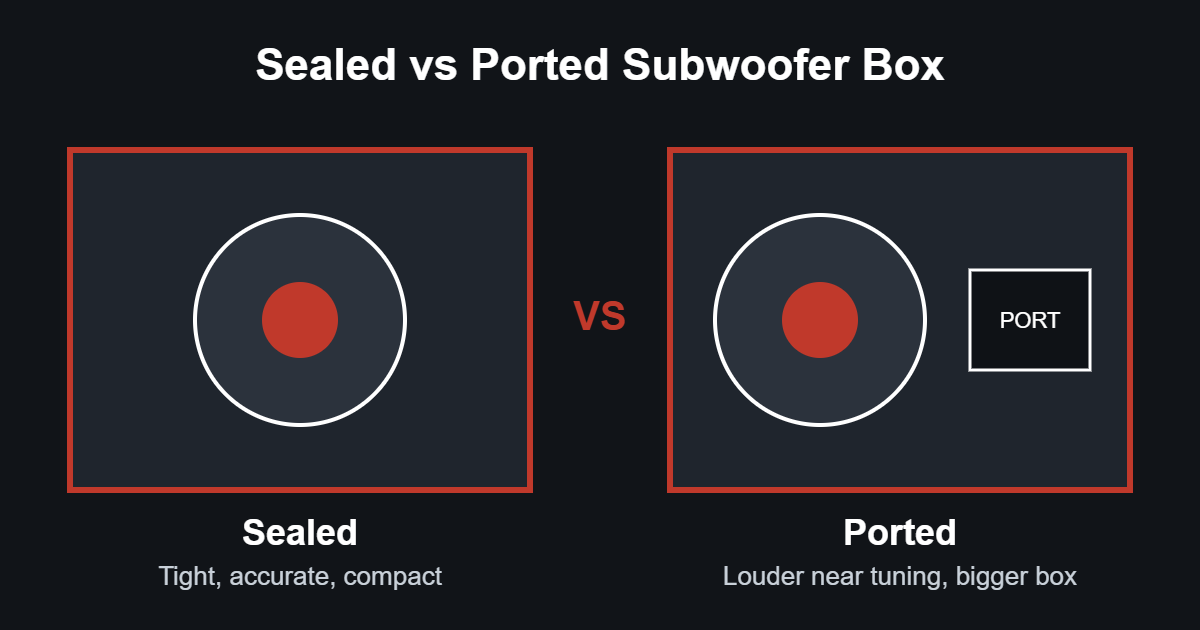
A great sub in the wrong box sounds bad. There are two main types.
Sealed boxes are small, simple and accurate. The bass is tight and clean, which is great for rock, jazz and anything where you want to hear each note. They take up less room too.
Ported boxes have a vent that boosts the low end. They’re louder and boomier, which suits hip-hop and EDM, but they’re bigger and a bit less precise.
If you’re not sure, go sealed. It’s more forgiving, and it’s hard to get wrong.
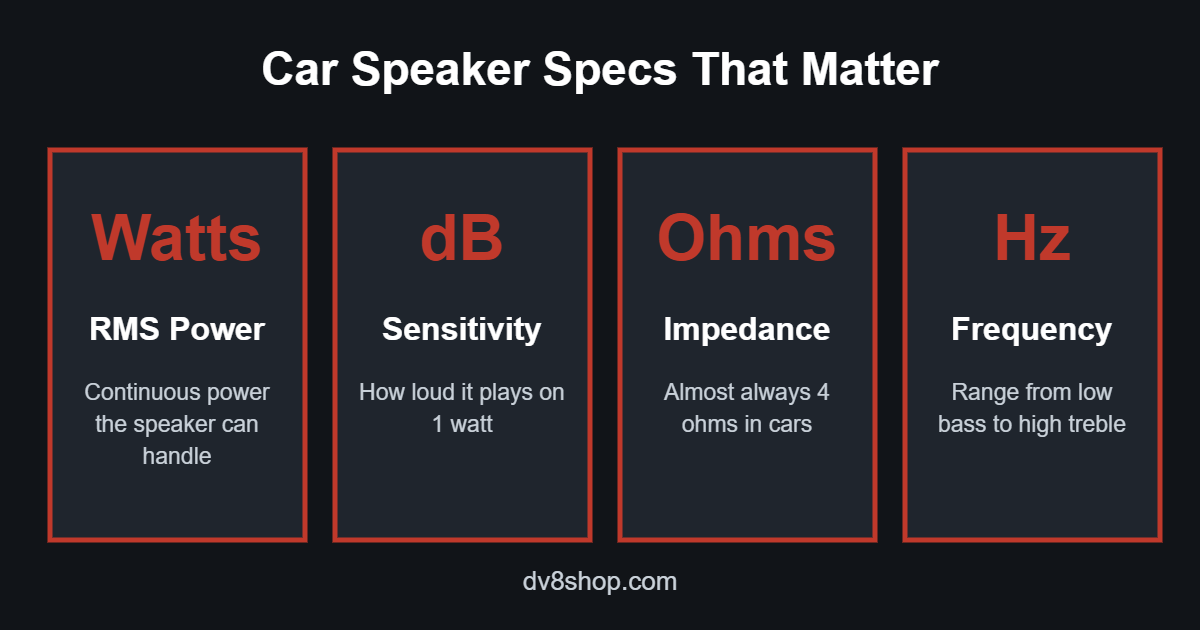
Once you’ve decided what size subwoofer to buy, look at the RMS rating on the sub, not the peak number on the box. Pick an amp that puts out close to that RMS at the sub’s impedance. A little extra amp power is fine, since clean power is safer than a weak amp pushed too hard. A weak amp that clips (distorts) is what actually damages subs, not too much power.
Neither is better. A 10 is tighter and faster, a 12 goes deeper. Pick based on your music and how much space you have.
Yes. A sub needs far more power than a head unit can give, so it needs its own amplifier. Many people buy a powered sub, which has the amp built in, to keep things simple.
For what size subwoofer fits, under-seat and slim subs, or a single 8 or 10 in a small sealed box, fit most small cars and extended-cab trucks. Measure your space before you buy.
A normal system won’t. Bigger systems that play loud for long periods with the engine off can, so keep the engine running or look at a stronger electrical setup.
If you’re still unsure what size subwoofer to buy, tell us your vehicle and what you listen to, and we can point you to a sub and box that fit. You can browse subwoofers and amplifiers at dv8shop.com or send us a message.
Car audio sound deadening explained: which panels matter most, how much material you really need, and 5 easy mistakes to avoid.
Sealed or ported sub box? Here's how each one sounds, how much space they need, and which fits your music, your car and your…
Confused by car speaker specs? Learn what RMS power, sensitivity and impedance mean and how to match speakers to your amp or stereo.